ServicesWhole-Home Filtration
Whole-Home Filtration in Gulfport, FL
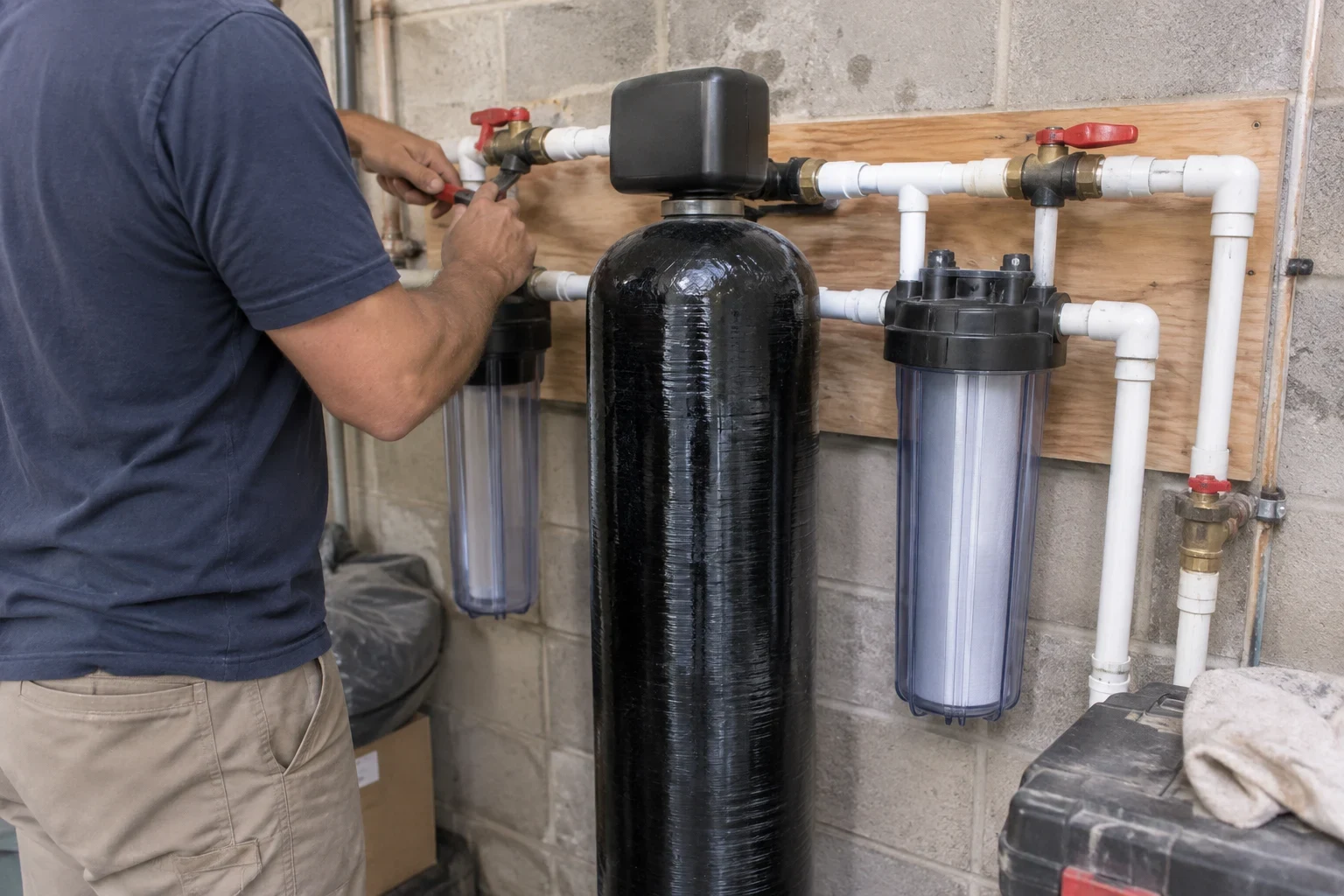
Our point-of-entry systems treat water the moment it enters your home. The kitchen tap, the showers and the washing machine all draw from one filtered supply. You get photos of the existing plumbing, each new joint and the finished install.
How point-of-entry treatment works and who it suits
The system goes on the main line just past the meter, ahead of the water heater and every branch line. In most of our installs, water passes first through a sediment prefilter, then through a tank packed with catalytic carbon. The prefilter holds back sand, pipe scale and grit. The carbon strips out chlorine, chloramine and the compounds that make a hot shower smell like a pool.
This is a good fit when taste, odor or post-shower dryness is the complaint and you want every tap handled, not only the kitchen. Hardness is a different problem. White spots on shower glass and crusted aerators come from calcium and magnesium, and carbon lets both pass straight through. Our water softeners page covers that work.
Before any pipe is cut, we take pictures of your main line, the shutoff and the planned install spot. They come back to you alongside shots of the finished system, so you have a clear record of what was there and what we changed.
What goes into the install
Sediment prefilter housing
A cartridge housing mounted upstream of the carbon catches particles before they can foul the media bed. It also keeps grit away from the O-rings and seals in the control valve.
Catalytic carbon vessel
Tank size follows how much water your home pulls at its busiest moment, such as two showers and a dishwasher running together. An undersized vessel shortens contact time, and chloramine needs more of it than chlorine to break apart.
Bypass assembly
An integrated or three-valve bypass sends water around the equipment during service, so the rest of the house keeps running. We demonstrate the handle positions before we pack up.
Tie-in matched to your pipe
Fittings are chosen for the pipe already in place, whether copper, CPVC or PEX. Where two different metals meet, we add a dielectric union so galvanic corrosion does not eat the joint.
Sun and salt protection
Plenty of homes in the area bring the main in through an outside wall. If the system has to stay outdoors, we set it on a level pad and shield the valve head from UV and salt air, which break down plastics and corrode fasteners.
Before-and-after record
You receive photos from each stage and a plain list of which parts wear out, with rough intervals for replacing them.
Signs your home needs filtration at the main line
- Pool odor in a closed bathroom
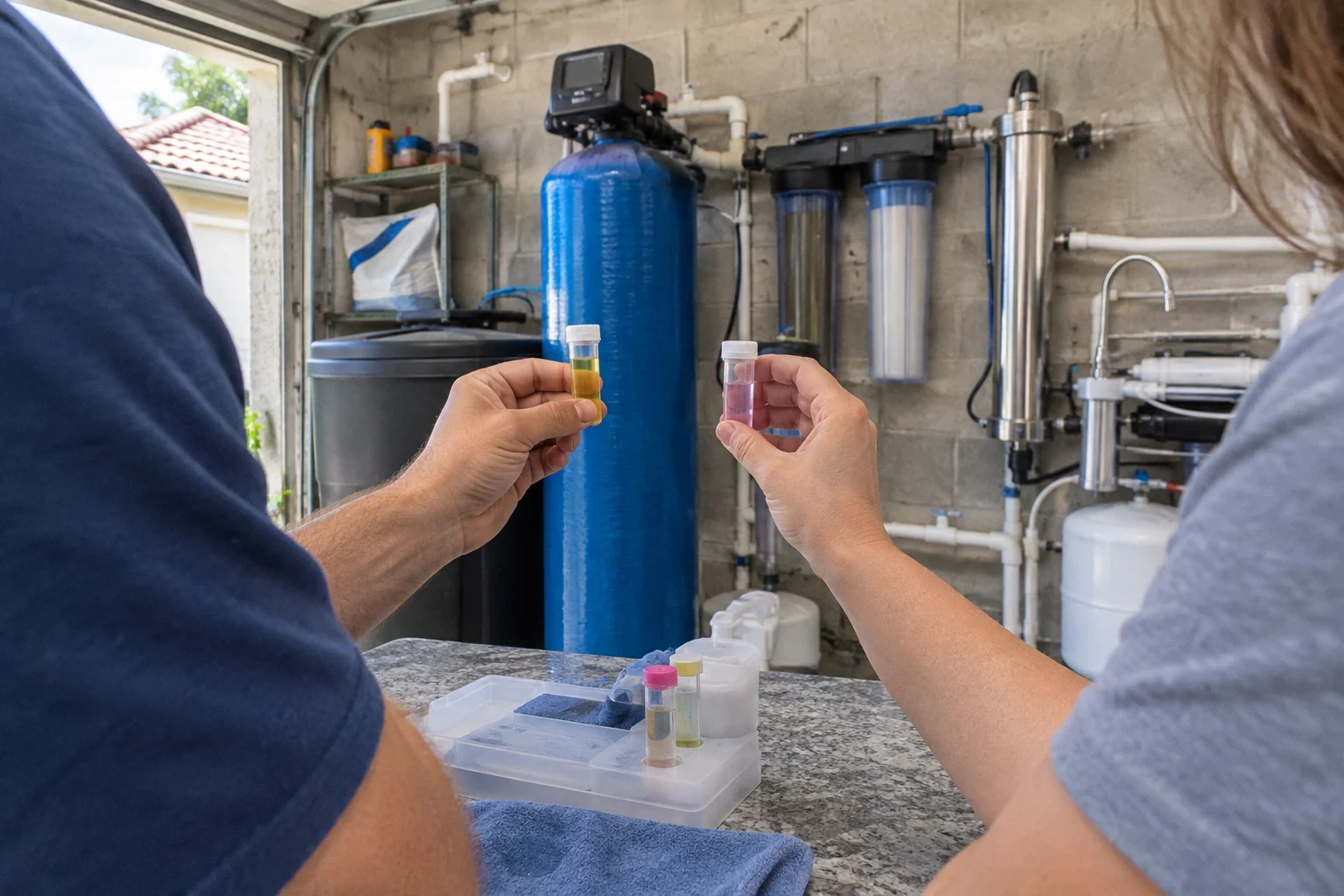
- Heat drives dissolved chlorine out of shower water and into the air you breathe, which is why the smell builds with the door shut. An under-sink filter never sees that water.
- Bottled water stacking up
- If everyone reaches for a bottle instead of a glass from the faucet because the flavor is off, a catalytic carbon tank at the point of entry typically corrects it at every tap together.
- Tight skin after showering
- Some people find their skin and hair feel less dry once disinfectant is taken out of the bathing water.
- Sand in screens and showerheads
- Specks or flakes collecting in aerator screens mean sediment is getting through the main. A prefilter stops it upstream of valves, cartridges and appliances.
- Flappers and hoses failing early
- Chloramine degrades rubber over time. Toilet flappers, faucet washers and supply hoses that crack ahead of schedule can point to it.
What happens on install day
- 1
A call to plan it
You describe what you notice in the water and where the main enters your home. We ask about bathroom count, pipe material and any softener or filter already on the line.
- 2
Documenting the starting point
When we arrive, we photograph the shutoff, the existing pipe and the planned location. If the system backwashes, we confirm a drain is within reach, and you approve placement before anything is cut.
- 3
Cutting in the system
Your water is shut off for a stretch of the visit while the bypass goes in and the vessels are connected. Each joint gets a picture before insulation or a cover goes over it.
- 4
Flush, pressure check, cleanup
Fine carbon dust from new media is rinsed to drain, then every fitting is checked under line pressure. We clean the work area and go over the bypass and the finished images with you.
What changes the price
We quote by phone once we know your home's layout and plumbing, and we break the number into its parts so nothing is a mystery. Four things move it most.
- Vessel size and flow
- A house that runs three or four bathrooms at once needs more media than a two-bath cottage. More media means a larger tank and a higher equipment cost.
- Choice of media
- Catalytic carbon costs more than standard carbon because it handles chloramine far better. A home with a separate water issue may need an added stage.
- What we find at the tie-in
- Corroded fittings or aging copper at the connection point sometimes have to be replaced before the new system can go on. We photograph that pipe so you can see the reason for the line item.
- Where the main enters
- An outdoor install adds a pad and a cover. Rerouting the main into a garage adds pipe, fittings and labor.
Whole-home filtration questions
- Will a whole-home filter lower my water pressure?
- With the right tank and port size, most people never notice a change. A real drop usually traces back to a vessel too small for the house or a prefilter cartridge that is overdue. We match the system to your peak flow, and swapping the cartridge on schedule keeps pressure where it should be.
- Does it remove chloramine as well as chlorine?
- Catalytic carbon does, provided the tank allows enough contact time. Chloramine is a more stable compound than chlorine, and ordinary carbon has trouble with it. Our Chlorine & Chloramine Removal page explains the media options in more depth.
- Do I still need reverse osmosis at the kitchen sink?
- Not always. Carbon takes care of taste and odor well. Reverse osmosis removes far more dissolved solids and some trace contaminants, so some households add an under-sink unit just for drinking and cooking water.
- Can it go in if I already have a softener?
- Yes. The carbon usually goes ahead of the softener, because chlorine wears down softener resin over time. We work out the order of equipment with you during the phone call.
- What maintenance does it need?
- The sediment cartridge is the part you swap most often, and how soon it clogs comes down to the amount of grit your main line carries, usually a matter of months. The carbon bed lasts for years, with the exact span set by how much water your household goes through. We offer ongoing customer support for maintenance, filter replacements, and service needs, so you have someone to call when it is due.
- Will it soften my water?
- No. Carbon leaves calcium and magnesium in place, so scale keeps forming. If spots and buildup are the problem, ask us about a softener, which can sit on the same line as the filter.
Know what is on your main line before anything changes
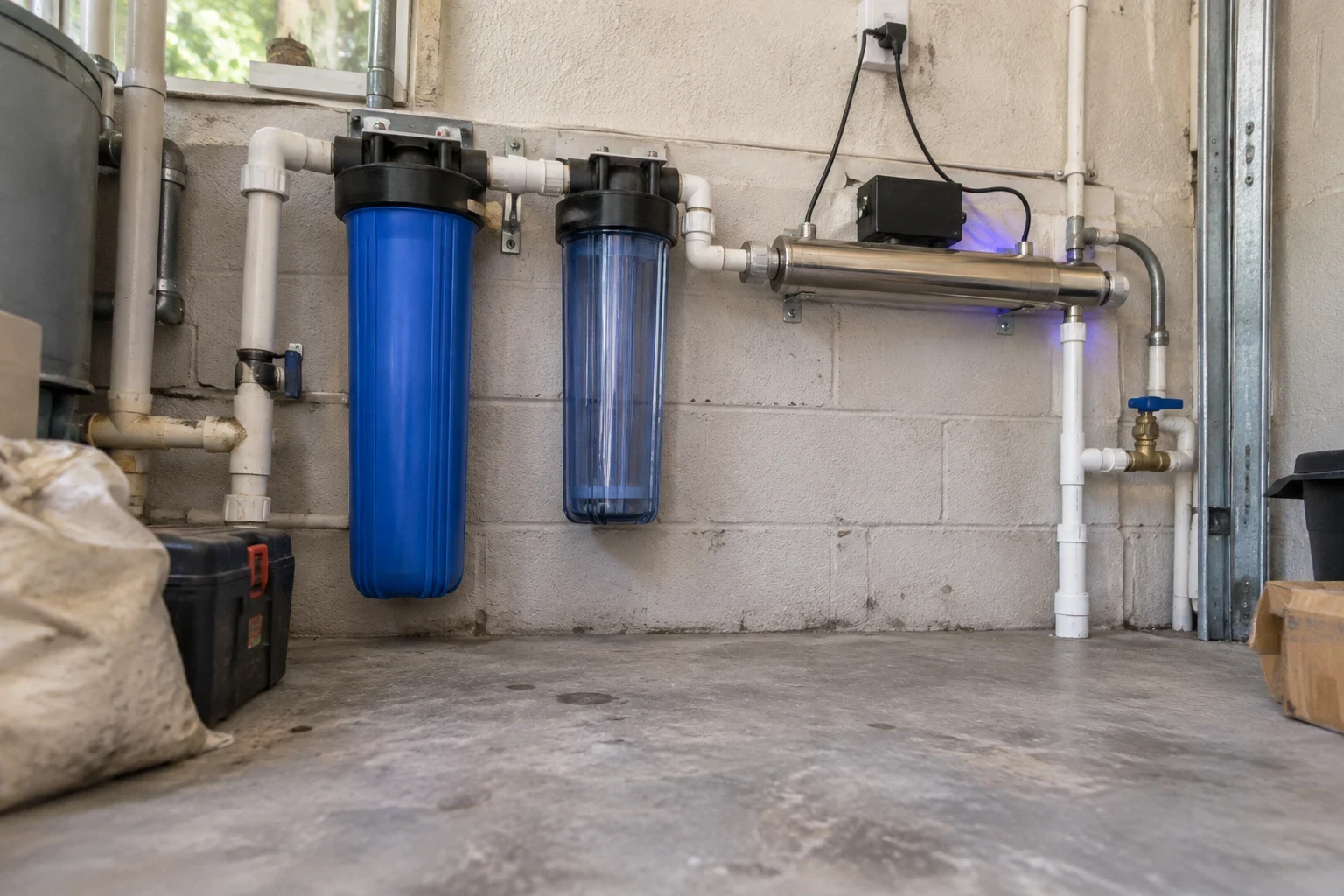
Tell us what bothers you about your water and how your plumbing is laid out. We will explain which system fits your home and how we would put it in.