ServicesChlorine & Chloramine Removal
Chlorine & Chloramine Removal in Gulfport
We install whole-house catalytic carbon systems that take chlorine and chloramine out of the water before it reaches your taps, showers and water heater. You get photos of your plumbing before we cut in, the finished install, and the bypass valve you will use later.
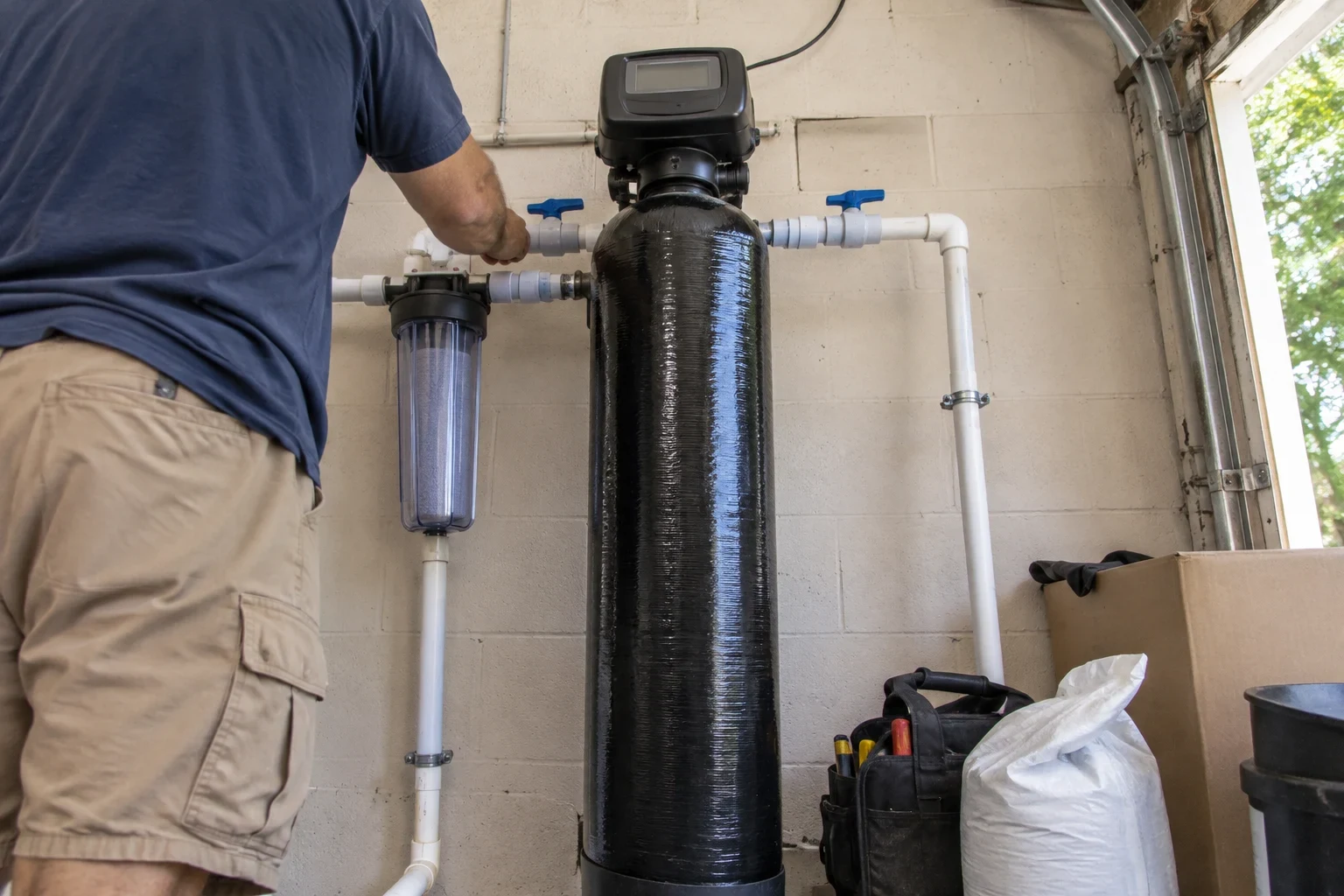
Why chloramine needs a different filter
Utilities add chlorine or chloramine to keep water safe on its trip through miles of mains. That job is mostly done once the water passes your meter. Inside your home, the same disinfectant turns into a chemical odor carried on hot shower steam, a dull edge on morning coffee and ice cubes, and rubber parts in toilets and faucets that wear out sooner than they should.
Free chlorine is easy to remove, and ordinary activated carbon handles it well. Chloramine is chlorine bound to ammonia. It was chosen because it lasts longer in the pipes, and that same stability means it breaks down slowly on standard carbon. Catalytic carbon has a modified surface that speeds up the reaction, but it still needs enough media and enough contact time. That is why we size the tank to your home's peak flow in gallons per minute, not to its square footage.
Your utility's annual water quality report says which disinfectant it uses, and we are glad to go over it with you on the phone. If you only want better drinking water at the kitchen sink, our Reverse Osmosis page covers that route.
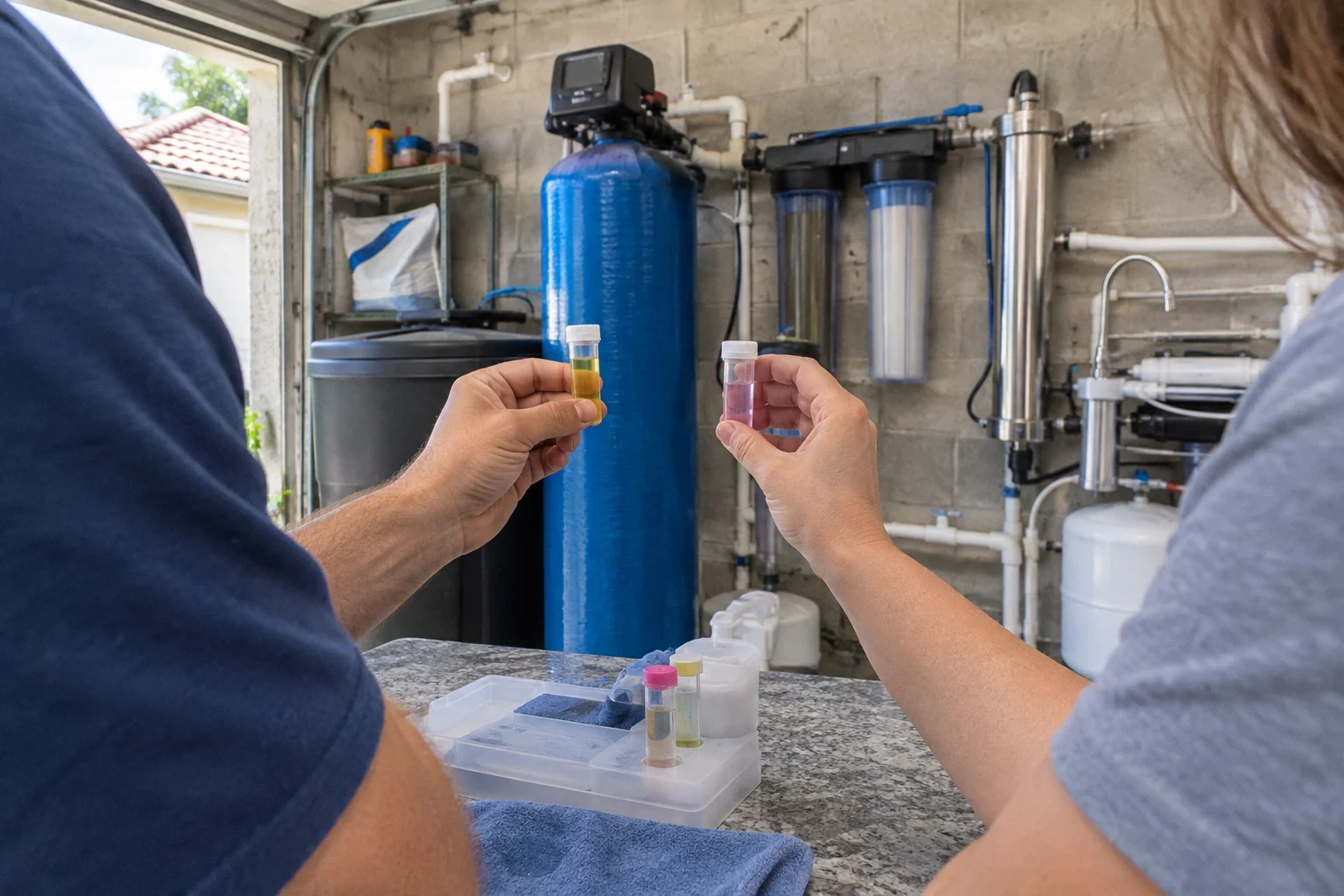
What goes into a chloramine removal install
- 01
Catalytic carbon media tank
The main vessel holds catalytic carbon in a volume matched to your peak flow, so water spends enough time in the bed for chloramine to break down. An undersized tank works on day one and lets odor through once the bed starts to load.
- 02
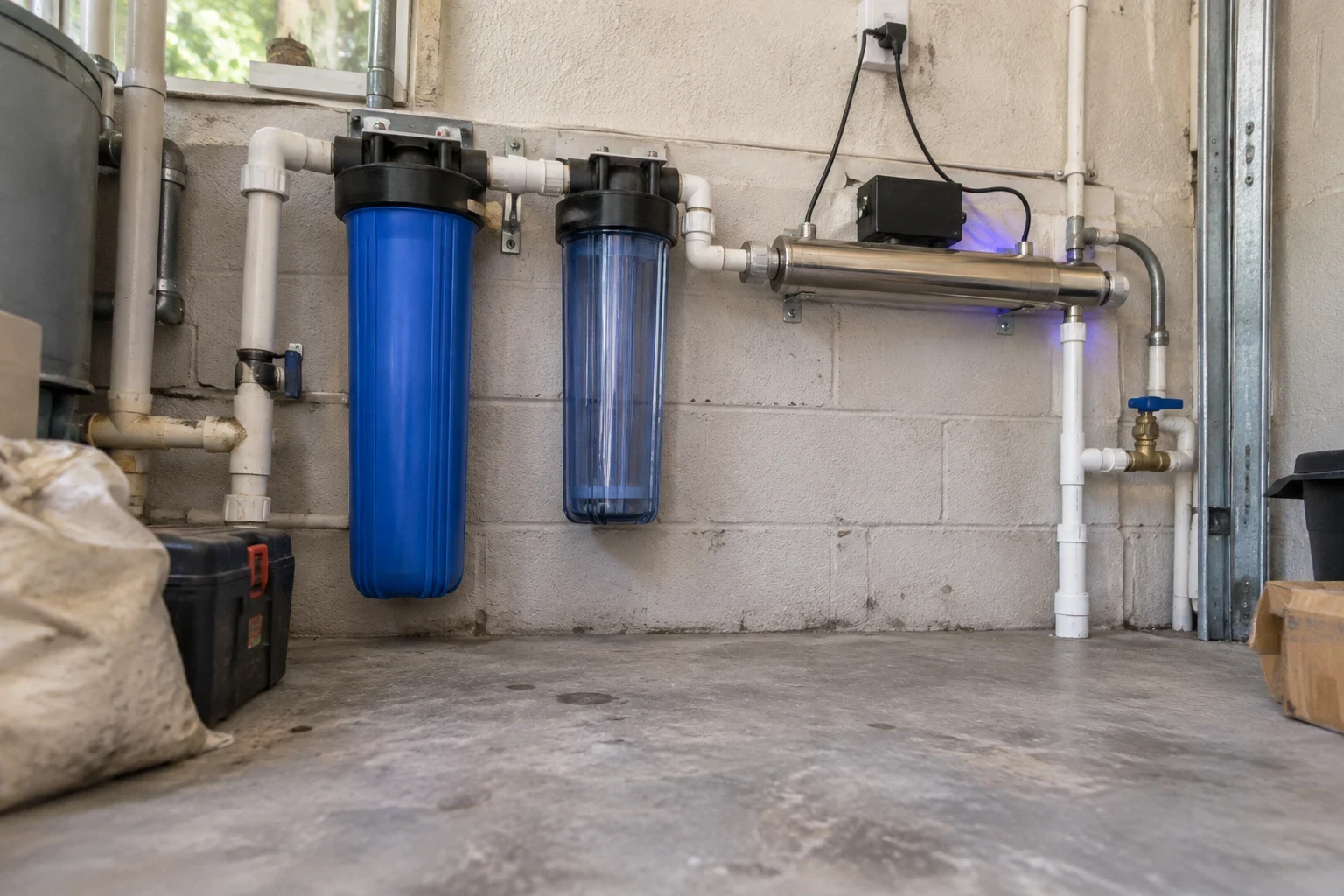
Sediment prefilter
A cartridge ahead of the tank catches sand and loose pipe scale. Without it, that grit coats the carbon granules and shortens the media's working life.
- 03
Bypass valve and shutoffs
A three-valve bypass lets you take the system offline for service or a cartridge change without shutting off water to the rest of the house.
- 04
Point-of-entry placement
We tie in after the meter and before the water heater, so every fixture gets treated water. In many Pinellas homes the main enters on an outside wall, so we set the tank on a level pad and shield the valve head from direct sun.
- 05
A labeled photo record
You receive a dated set covering the existing main and fittings, the cut-in, and the finished install. It notes the media type and install date, which makes future service simple for anyone who works on the system.
- 06
Support after the install
We provide ongoing customer support for maintenance, filter replacements, and service needs.
Questions about Chlorine & Chloramine Removal?
Call(727) 634-9444Signs your water needs chloramine removal
The shower smells like a pool
Hot water releases more of the disinfectant into the air, so the smell is strongest in an enclosed bathroom. A kitchen faucet that seems fine can still mean a noticeable shower.
Flappers and washers keep failing
Chloramine is harder on certain rubber compounds than chlorine is. Toilet flappers that swell or soften and faucet washers that leak early are a common pattern.
Coffee, tea and ice taste off
Disinfectant flattens delicate flavors, and ice made from unfiltered water carries the taste into every drink.
You keep fish or a pond
Chloramine is toxic to fish, and unlike chlorine it does not gas off when water sits out overnight.
Your current carbon filter stopped keeping up
A standard carbon system installed before a switch to chloramine, or one sized too small, often lets the smell creep back within months.
How the work goes, step by step
- 1
A conversation by phone
We ask about household size, the number of bathrooms, the odor or taste you notice, and any treatment equipment already installed. Those answers set the flow rate the system has to handle.
- 2
Looking at the plumbing
We find where the main enters, measure the pipe size and material, check for a pressure regulator, and confirm a level spot with drain access if the valve backwashes. We photograph all of it before anything is cut.
- 3
Install day
We shut off the water, cut into the main, and fit the bypass, prefilter and tank. Then we flush the new carbon until the fine dust clears, so the first water you draw runs clean. Your water is off for part of the visit, and we tell you before it goes off.
- 4
Handoff and photo record
Before we leave, you turn the bypass handles yourself and swap a prefilter cartridge with us watching, so neither task is a mystery later. The before and after photos are yours to file with the rest of your home's records.
What affects the cost of chloramine removal
Most of the price comes from the amount of carbon your home needs and the work to tie it into your main line. We explain each part of the quote over the phone, so you know what you are paying for before we schedule anything.
- Peak flow and tank size
- A home with three bathrooms running at once needs a larger bed of media than a two-person condo. Larger tanks hold more catalytic carbon and cost more.
- Media type and quantity
- Catalytic carbon costs more than standard activated carbon. For chloramine it is the material that actually does the work.
- Valve style
- A backwashing control valve keeps the bed from packing down but needs a drain and power. A simpler upflow tank skips both and suits some homes better.
- Plumbing access and pipe material
- Copper, CPVC and PEX each take different fittings. A main buried in a wall or reached through tight landscaping adds labor.
Chloramine removal questions
Will a pitcher or refrigerator filter take out chloramine?
Partly at best. Those filters hold a small amount of carbon, and water passes through it quickly, which is the opposite of what chloramine needs. They also do nothing for the shower or the rubber parts in your fixtures.
How long does the catalytic carbon last?
Media life comes down to the total volume of water pushed through the bed and the disinfectant level the utility doses. A correctly sized bed lasts far longer than a cartridge filter. Once we know your household size, we tell you what to expect and remind you when replacement is due.
Is it safe to remove the disinfectant inside my home?
Yes. The disinfectant protects water on its way through the public mains. Once filtered, water inside your home is used quickly, and the system stays healthy as long as it is in regular use and the media is replaced on schedule.
What happens to the ammonia in chloramine?
Catalytic carbon breaks the chlorine away, and a small amount of ammonia can pass through. At tap water levels, most people never taste it. If you keep fish, keep using a water conditioner, and if you want it reduced at the drinking tap, a reverse osmosis system at the kitchen sink handles that.
Can this work alongside a water softener?
Yes, and the carbon goes first. Chlorine and chloramine slowly break down softener resin, so filtering ahead of the softener helps the resin last. Our Water Softeners page explains whether softening makes sense for your home.
Find out what size system your home needs
Give us a rough sense of your household and the smell or taste that bothers you. On the call we walk through tank size, media choice and the install plan, and once work begins, each step is documented for you.