ServicesWater Softeners
Water Softeners in Gulfport
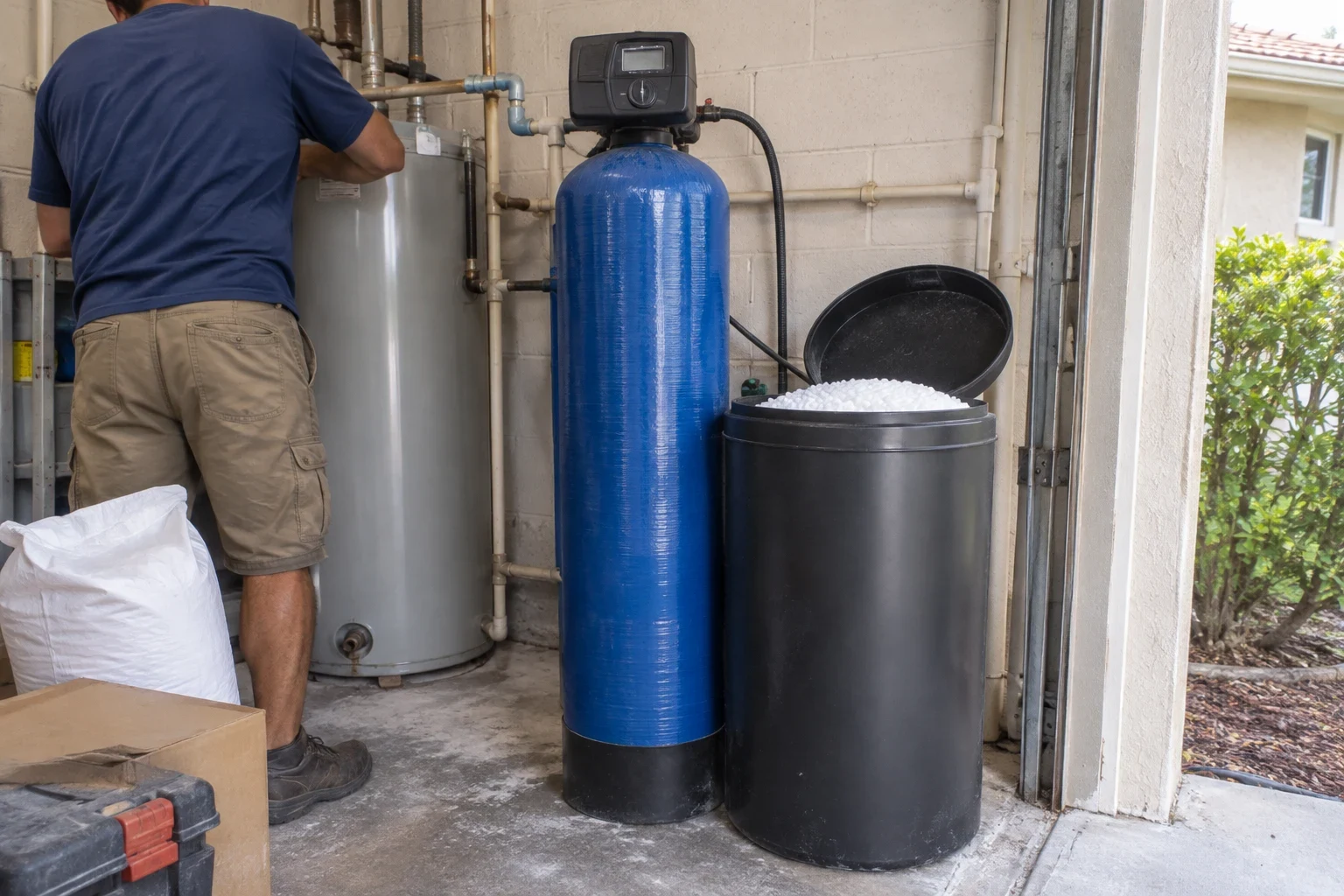
Calcium and magnesium in your water leave scale inside your water heater, fixtures and appliances. A softener trades those minerals out at the main line before they get that far. We size the resin tank to your hardness and daily use, then document each step in photos so you see what went in.
What a softener does and when it's worth it
A softener works by ion exchange. Inside the mineral tank sits a bed of small resin beads, each one charged with sodium or potassium. As your water moves through that bed, calcium and magnesium stick to the beads and the sodium or potassium is released in their place. When the resin has taken on all the hardness it can hold, the control valve starts regeneration: brine pulled from the salt tank washes through the bed, knocks the captured minerals loose and sends them to the drain.
It is the right call when hardness is causing real problems: crusty aerators, a water heater that pops and rumbles, spotting that won't wipe off glass. It is not a filter. A softener does nothing for chlorine taste, sediment or most contaminants, so if those are your complaints, Whole-Home Filtration or Reverse Osmosis may fit better. We'll tell you which one matches the problem. We also often pair a softener with a carbon stage, because chlorine slowly breaks down resin.
Before we cut into anything, we photograph the existing plumbing at your main line. After the install you get the finished set too, so you know what is on your wall and why it is there.
What's included in a softener install
Sizing by grain capacity
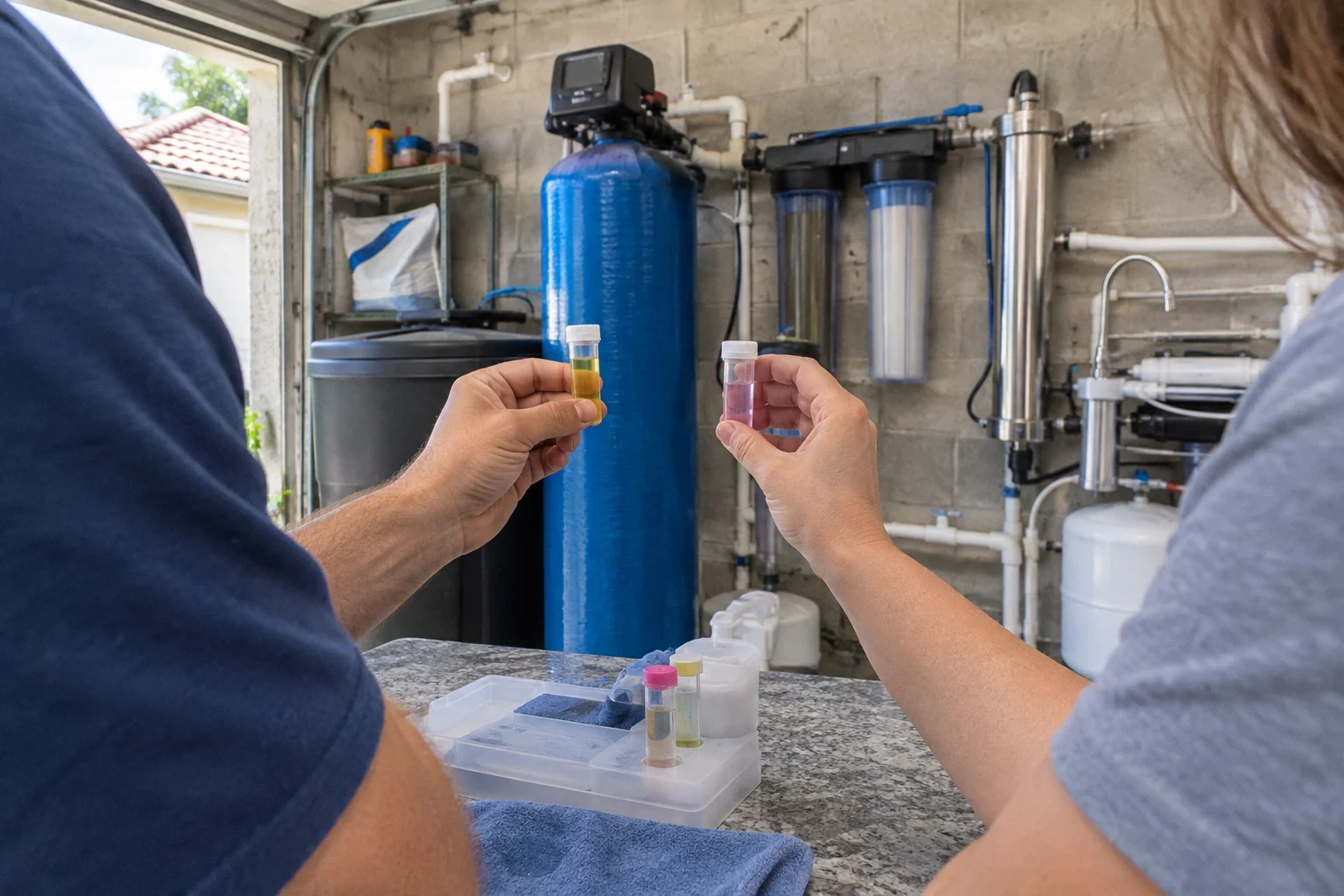
We calculate capacity from your water's hardness in grains per gallon, the number of people in your home and your daily use, working from your utility's published water quality figures or a report you already have. An undersized tank regenerates too often and burns salt. An oversized one lets resin sit too long between cycles.
Metered control valve
The valves we fit are demand-initiated. They count the gallons passing through and only regenerate once the resin has actually done its work, so you use less salt and less water than a timer valve that cycles on a fixed calendar whether you needed it or not.
Bypass valve and full-size connections
Every install gets a bypass so the softener can be isolated for service without shutting off water to the house. Fittings match your line size so shower pressure doesn't drop.
Drain line with an air gap
Regeneration water discharges to an approved drain point with a physical gap between the hose end and the receptor. That open space means dirty brine has no path to be pulled back into your plumbing.
Carbon pre-stage when it makes sense
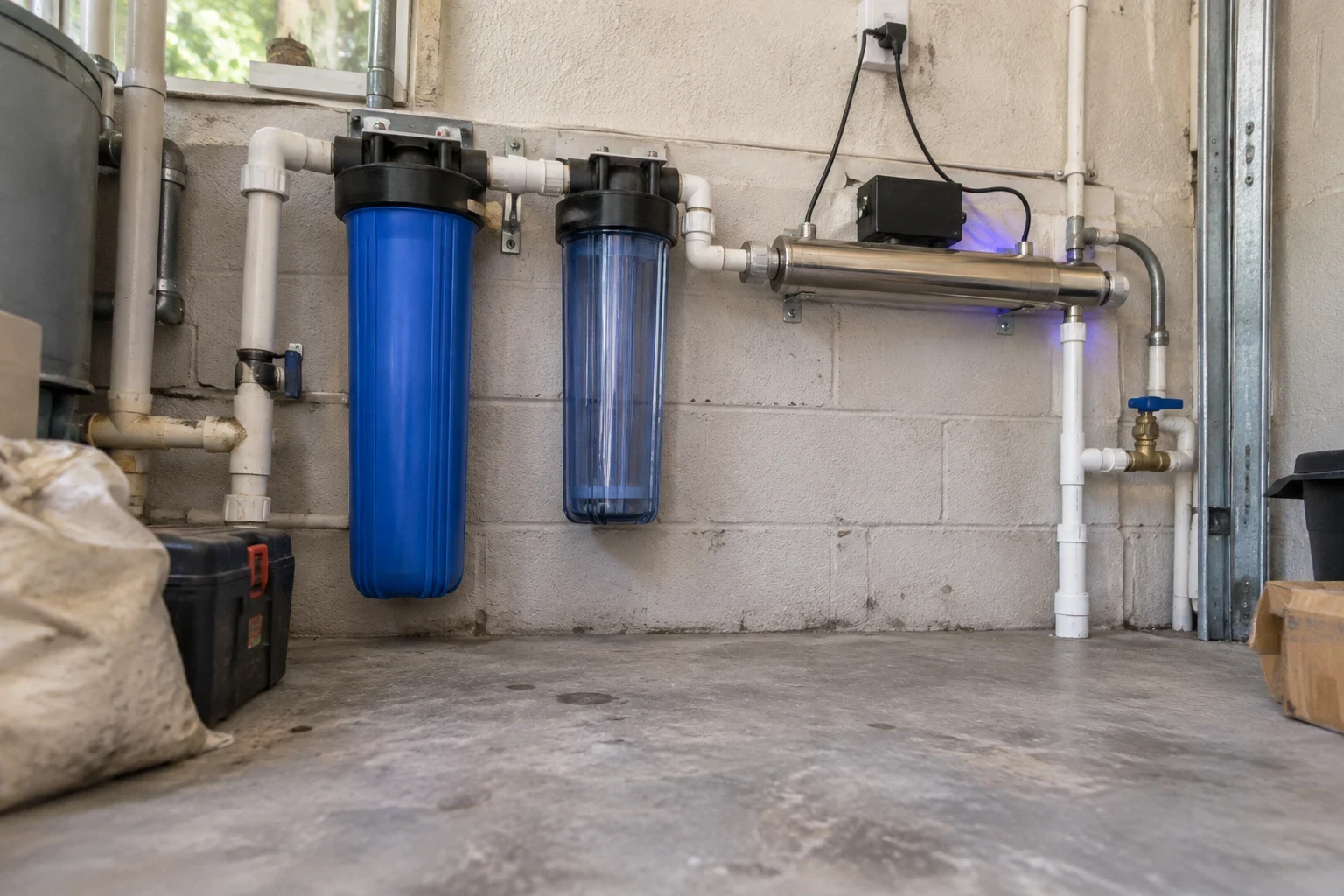
If your water is chlorinated, a carbon stage ahead of the softener protects the resin from oxidizing. Our Chlorine & Chloramine Removal page explains how that stage works.
Photo record and startup
You get pictures of the original plumbing, each connection and the finished system, plus a walkthrough of the salt level and the bypass handle.
Signs your home needs a softener
- White crust on faucets and showerheads
- That chalky buildup is calcium carbonate. It narrows aerators and showerhead nozzles until the spray pattern breaks up and flow drops.
- A water heater that pops or rumbles
- Noise from a tank water heater usually means scale has settled on the bottom, insulating the burner or element from the water. The heater runs longer and the tank wears out sooner.
- Spots on glass and shower doors
- Mineral spots that come back hours after cleaning are hardness left behind as water evaporates.
- Soap that won't lather
- Hard water reacts with soap to form curd instead of suds. You use more detergent and shampoo, and skin and hair can feel coated after rinsing.
- Appliances that keep needing descaling
- Dishwashers, ice makers and tankless heaters have narrow passages that scale clogs first. Repeat descaling or repair calls point upstream to the water itself.
How a softener install day runs
- 1
Sizing by phone
On the call we'll want to know your household size, where the main line comes into the house and what your taps and fixtures are showing you. Those answers decide which tank size and fittings we load on the truck.
- 2
Photos of the existing setup
We document the main line, the shutoff, the nearest outlet and the drain options before any cutting, and show you what we found.
- 3
Cut-in and connection
We shut off the water, cut into the main line, install the bypass, set the resin and brine tanks and run the drain line with its air gap. Where the plumbing allows, we leave outdoor spigots on unsoftened water so you aren't spending salt on irrigation.
- 4
Programming and first regeneration
We enter hardness and capacity into the valve, add salt, run a manual regeneration and check every joint for leaks under full pressure.
- 5
Walkthrough and handoff
We go over the finished pictures with you and show you how to use the bypass and when to check salt. Ongoing customer support for maintenance, filter replacements, and service needs continues after the install.
What moves the price of a softener
Softener cost comes down mostly to capacity and to how much plumbing it takes to get the system onto your main line. You get your quote by phone once we understand your setup, and we explain each line of it so nothing changes without a conversation.
- Tank capacity and resin grade
- Larger grain capacity means a bigger resin tank. Higher-crosslink resin costs more up front but holds up better against chlorine over the years.
- Valve type
- A metered single-tank valve suits most homes. Large households with heavy use may need a twin-tank alternating system that never goes offline during regeneration, which costs more.
- Plumbing access and pipe material
- Copper, CPVC and PEX each take different fittings and labor. Adding an outlet, extending a drain line or rerouting to split off outdoor spigots adds time.
- Pre-filtration and outdoor protection
- A carbon stage adds equipment but extends resin life. Units mounted outdoors need a cover to keep sun and rain off the valve.
Softener questions we hear
- Will a softener make my water taste salty?
- The sodium added is proportional to the hardness removed, and at typical levels most people can't taste it. If you'd rather avoid sodium, potassium chloride works in most softeners, though it costs more per bag. Many people also add a reverse osmosis unit at the kitchen sink for drinking and cooking water.
- I already have a filter. Do I still need a softener?
- They do different jobs. A carbon filter removes chlorine taste and odor but leaves calcium and magnesium in place, so scale keeps forming. A softener handles hardness and nothing else, which is why the two are often installed together.
- How often does the brine tank need salt?
- Salt use depends on two things: the hardness level of your supply and the volume of water your household draws each month. Checking the tank once a month is a sensible routine, and you want it no lower than about one-third full. While you're there, push a broom handle down through the salt to check for bridging, a hard crust that hides an empty space underneath and keeps brine from forming even when the tank looks full.
- Can the softener go outside or in the garage?
- Yes. Many slab homes around Gulfport have the main line entering at an exterior wall or in the garage, and that's usually the best spot. Outdoor units get a cover to protect the valve electronics and keep sun off the tanks.
- What if I already have an old softener that isn't working?
- Sometimes a failed valve seal or a clogged injector is all it is, and our Water Softener Repair & Maintenance service covers that. If the resin is exhausted or the valve is obsolete, Water Softener & Filtration System Replacement is the better route. We'll show you what we find so you can decide.
Find out what size softener your home needs
Tell us what you're seeing at your faucets and water heater, and we'll talk through sizing, placement and cost on the call. Every step of the install is photographed for your records.