ServicesSystem Replacement
Water Softener & Filtration System Replacement in Gulfport
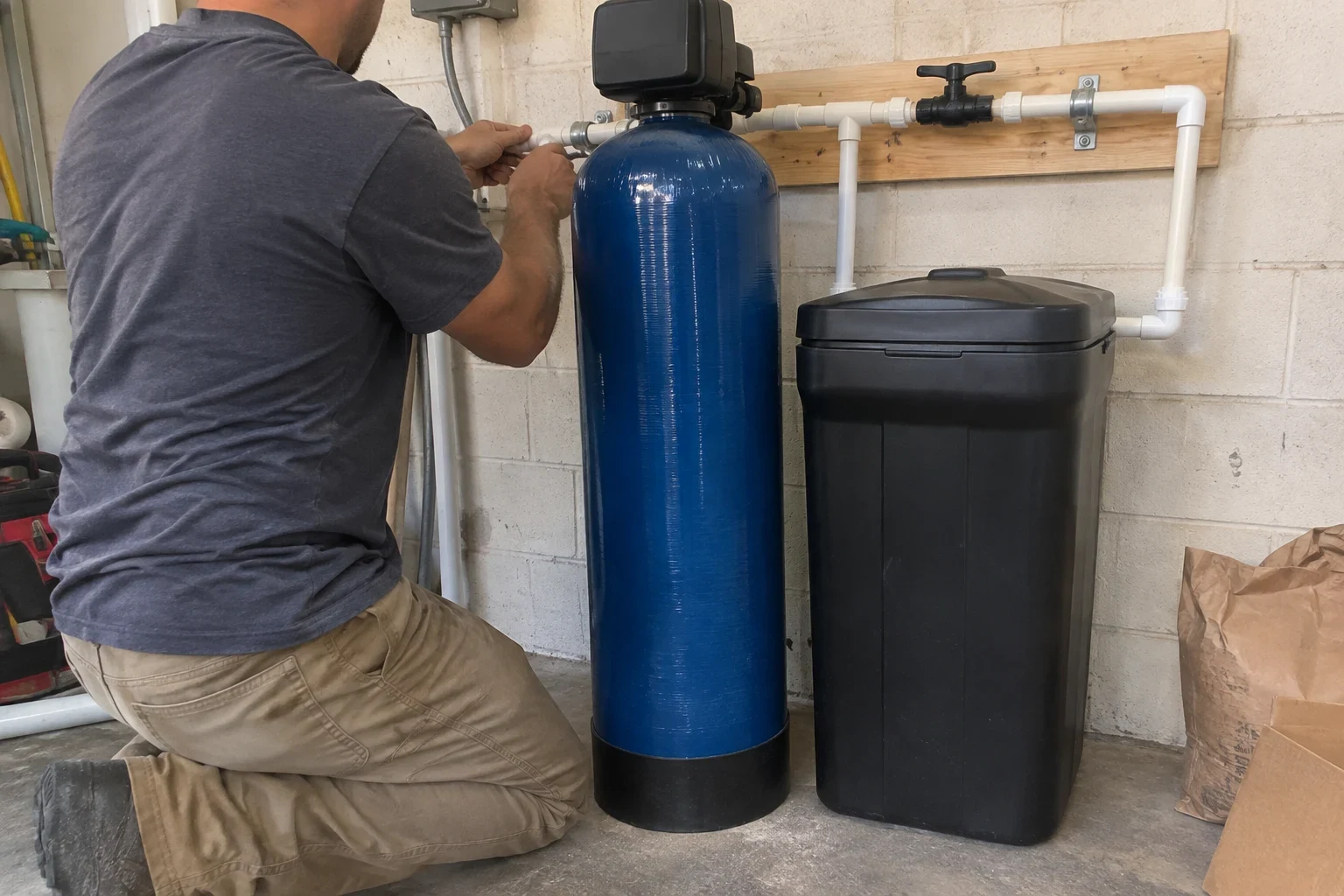
When an old softener or whole-home filter has reached the point where repairs no longer make sense, we remove it, install a correctly sized replacement and reconnect it to your home's plumbing. You get photos of the old equipment, the open connections and the finished install.
When replacement is the right call
Most softeners and filtration systems don't fail all at once. The piston seals in a control valve wear, resin beads break down after years of contact with chlorinated water, and carbon media gets exhausted and starts to channel. Eventually the cost of a new valve plus a media rebed gets close to the cost of a new system, and the tank itself may be weeping at the base.
We give you a straight answer on which side of that line your equipment sits. If a seal kit or a fresh resin bed will bring it back, we'll say so and point you to our Water Softener Repair & Maintenance service. If the tank is cracked, the valve is a discontinued model with no parts, or the system was sized wrong from the start, replacement is the better use of your money.
Every step is photographed: the unit as we find it, the media when we open the tank, the bypass and drain connections, and the new system running. You keep that set as a record of what's in your home.
What a replacement includes
Removal of the old tanks and valve
We put the system in bypass, relieve pressure, drain the mineral and brine tanks and carry the old equipment out. Spent resin and carbon leave bagged, not rinsed down your drain.
Sizing to your household
We size the new tank by the number of people, bathrooms and fixtures and the peak flow your plumbing demands, not by what fits the old footprint. An undersized tank drops pressure when two showers run. An oversized one sees too little flow through the bed and can channel.
New bypass and plumbing connections
A fresh bypass valve lets the system be isolated for service without shutting off the house. We remake the inlet and outlet with fittings that match your existing copper, CPVC or PEX, and brittle flex connectors get replaced rather than reused.
Drain line with a proper air gap
The regeneration drain gets an air gap so wastewater can't siphon back toward the tank. We secure the line so it doesn't whip around during backwash.
Programming and startup
We load media, purge trapped air, set the regeneration schedule and salt dose on the valve, then run a manual cycle while we watch every joint.
Handoff and ongoing support
At the end of the visit we point out the bypass handles, where the salt goes and how a sediment prefilter cartridge twists out, and we go over the pictures from each stage together. Once the system is running, we offer ongoing customer support for maintenance, filter replacements, and service needs.
Signs your system is due for replacement
- Scale returns after a rebuild
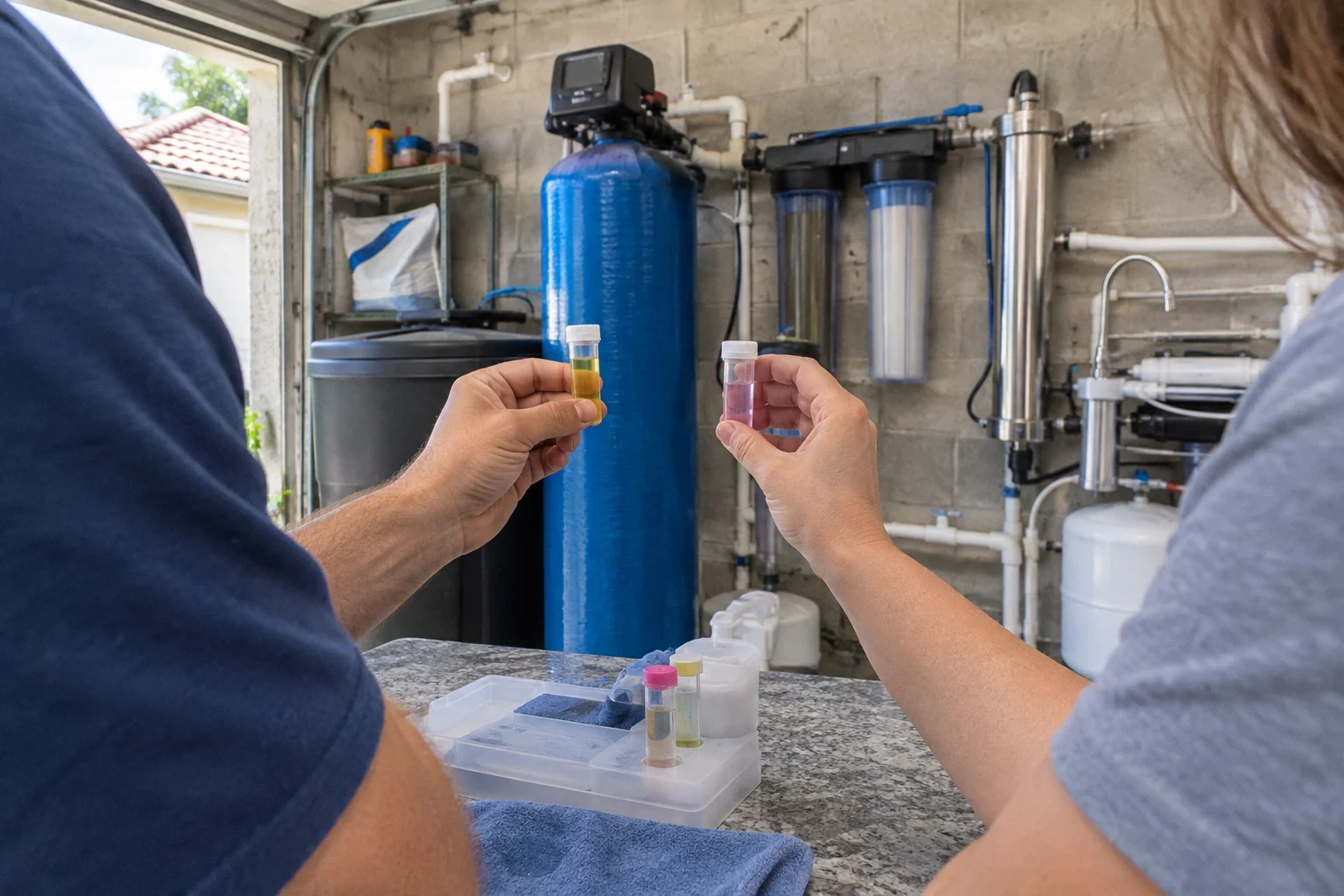
- If spotting and crusty fixtures come back even after new seals and a full salt fill, the resin is likely fouled or broken down. Old resin turns soft and sheds fines into your lines.
- Resin beads in aerators
- Small amber beads in faucet screens or toilet tanks mean the distributor tube or its bottom basket has cracked. That repair usually means a full tank teardown anyway.
- Water around the tank base
- Fiberglass-wrapped mineral tanks can split at the bottom dome or the threaded neck. A cracked pressure tank can't be patched safely.
- Valve parts no longer made
- Many older timer-based valves have no replacement motors or gear sets available. A modern metered valve regenerates by actual water use, so it burns less salt and sends less water to the drain.
- Chlorine taste coming through the filter
- Exhausted carbon stops removing chlorine and chloramine. If a non-backwashing tank is well past its rated gallons, swapping the whole unit is often simpler than rebedding it.
- Heat and corrosion damage
- Equipment in a hot Gulfport garage or on an exterior wall shows brittle brine tank lids, corroded bypass handles and cracked filter housings sooner than indoor installs do.
How replacement day runs
- 1
Phone conversation first
On the call we ask what you have, roughly how old it is and what's going wrong. Then we look at the install spot, your plumbing material and the nearest drain before we price the job.
- 2
Before pictures and shutdown
We photograph the old unit, the valve label and the existing connections. Then we close the main, bypass the system, relieve pressure and lay a drop cloth under the work area.
- 3
Swap and reconnect
The old tanks come out and the new ones are set level on a solid base. We remake the plumbing and document the new joints before the water comes back on.
- 4
Startup and leak check
We refill slowly to push air out, run a backwash and rinse, and check every fitting under full pressure. Then we run a nearby faucet until the water is clear of air and media fines.
- 5
Settings and records
You get the photo set, a written note of the regeneration settings we programmed, and a quick lesson on salt, the bypass and filter changes.
What moves the price of a replacement
Cost depends mostly on what goes in and how much work it takes to get the old system out and the new one connected. We explain each line item before any work begins, so you know what every part of the job is for.
- System type and size
- A softener, a carbon filter and a combined softener-carbon setup use different tanks and media. Larger tank diameters hold more resin or carbon and cost more to supply and set.
- Control valve
- Metered valves with features like proportional brining cost more than basic timer valves, but they usually save salt and water over the life of the system.
- Plumbing condition
- Corroded shutoffs, a missing bypass loop or a drain that has to be rerouted all add parts and time. We point these out in the before pictures so you can see why they're on the estimate.
- Access and location
- A tight utility closet, a long carry or an outdoor install that needs a cover takes more labor than an open garage floor.
- Removal and disposal
- Big tanks full of wet media are heavy. Hauling them out and disposing of the spent resin or carbon is part of the job and shows up as its own line.
Replacement questions
- Can you reuse my existing brine tank or bypass?
- Sometimes. A clean brine tank with an intact float assembly can stay, and we'll tell you if it can. Bypass valves and old flex connectors are usually replaced because their O-rings harden with age and they're the most common leak point after a swap.
- How long will my water be off?
- The main is closed only while the old tanks come out and the new connections are made. For a straightforward swap that's typically part of a day, and we give you a realistic window on the phone once we know your setup.
- Should I replace my softener with the same kind of system?
- Not always. If your real complaint is chlorine taste and odor rather than scale, a carbon system from our Chlorine & Chloramine Removal service may suit you better. If you mainly want cleaner drinking water at the kitchen tap, Reverse Osmosis can be added under the sink alongside a whole-home system.
- What happens to the old equipment?
- We take it with us. Tanks, valves and bagged media leave your home the same day, and the area is wiped down before we go.
- Will I actually see what you found inside the old system?
- Yes. You get pictures of the equipment as we found it, the opened media and old connections, and the finished install. They're useful later if you sell the house or need service down the road.
- Do I need to be home during the install?
- Someone should be there at the start so we can confirm the location and shutoffs, and at the end so we can show you the new setup. In between, you can go about your day.
Ready to retire the old system
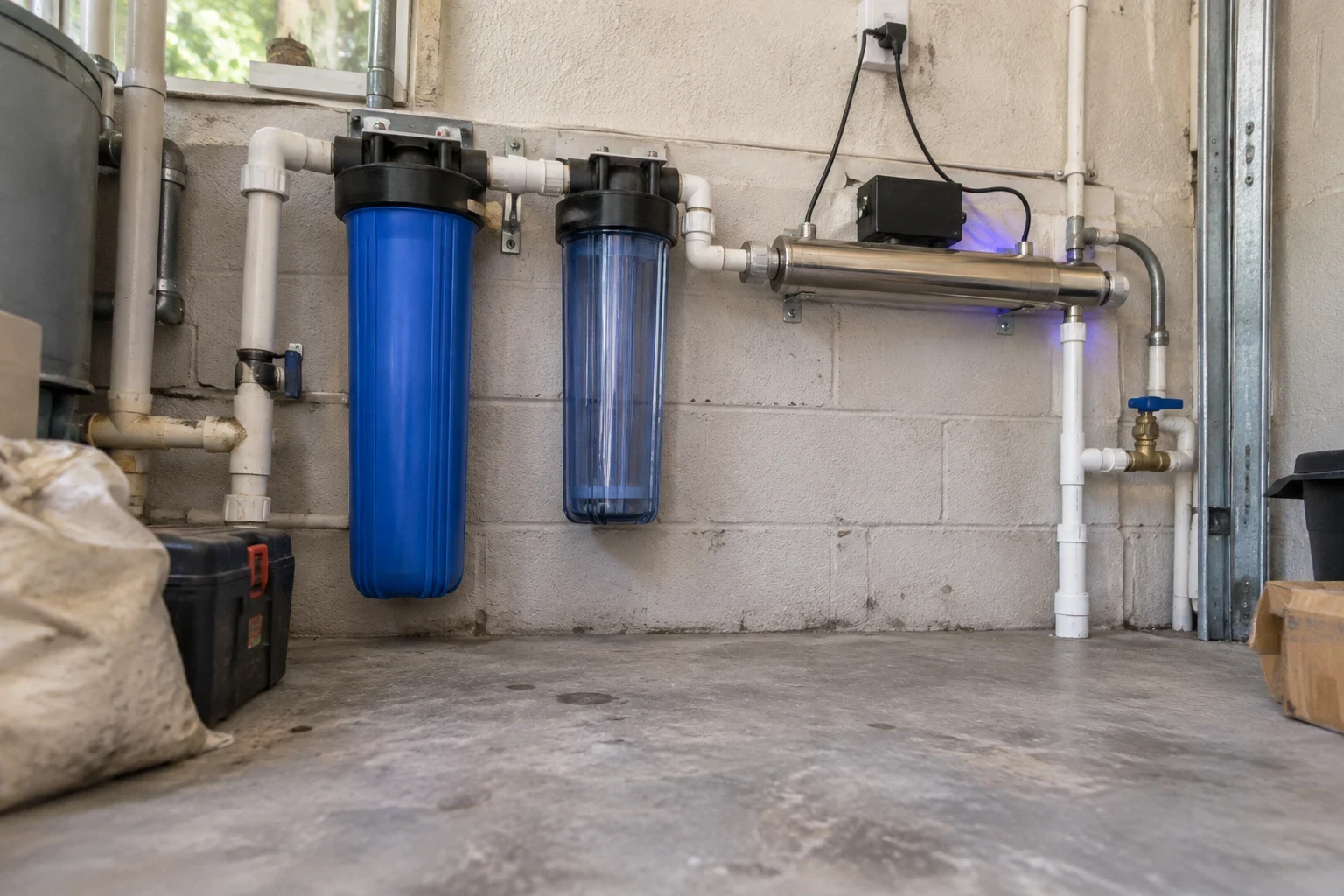
Tell us what you have and what it's doing. We'll talk through whether repair or replacement makes sense and what the new setup would include.