ServicesWell Water Treatment
Well Water Treatment in Gulfport
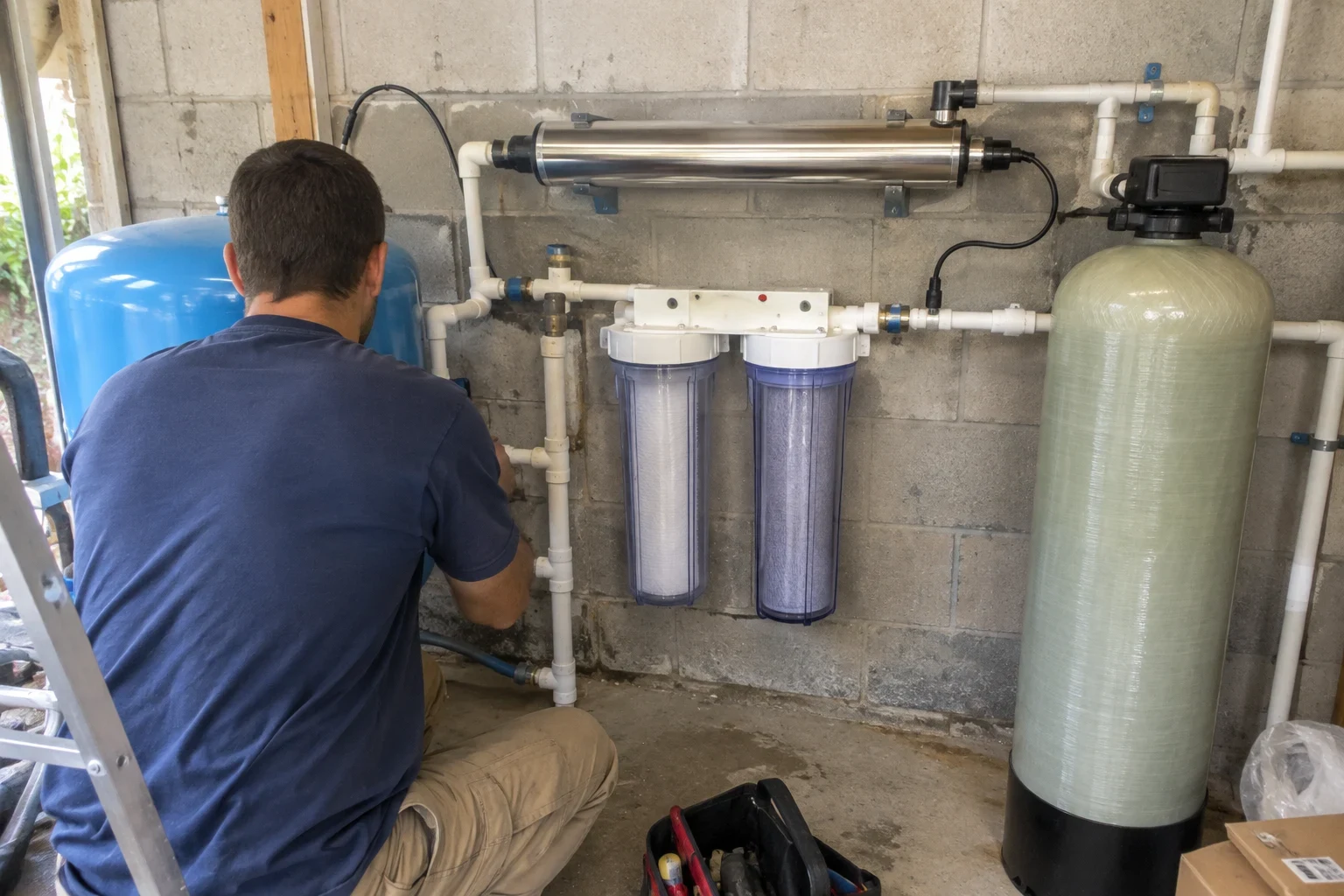
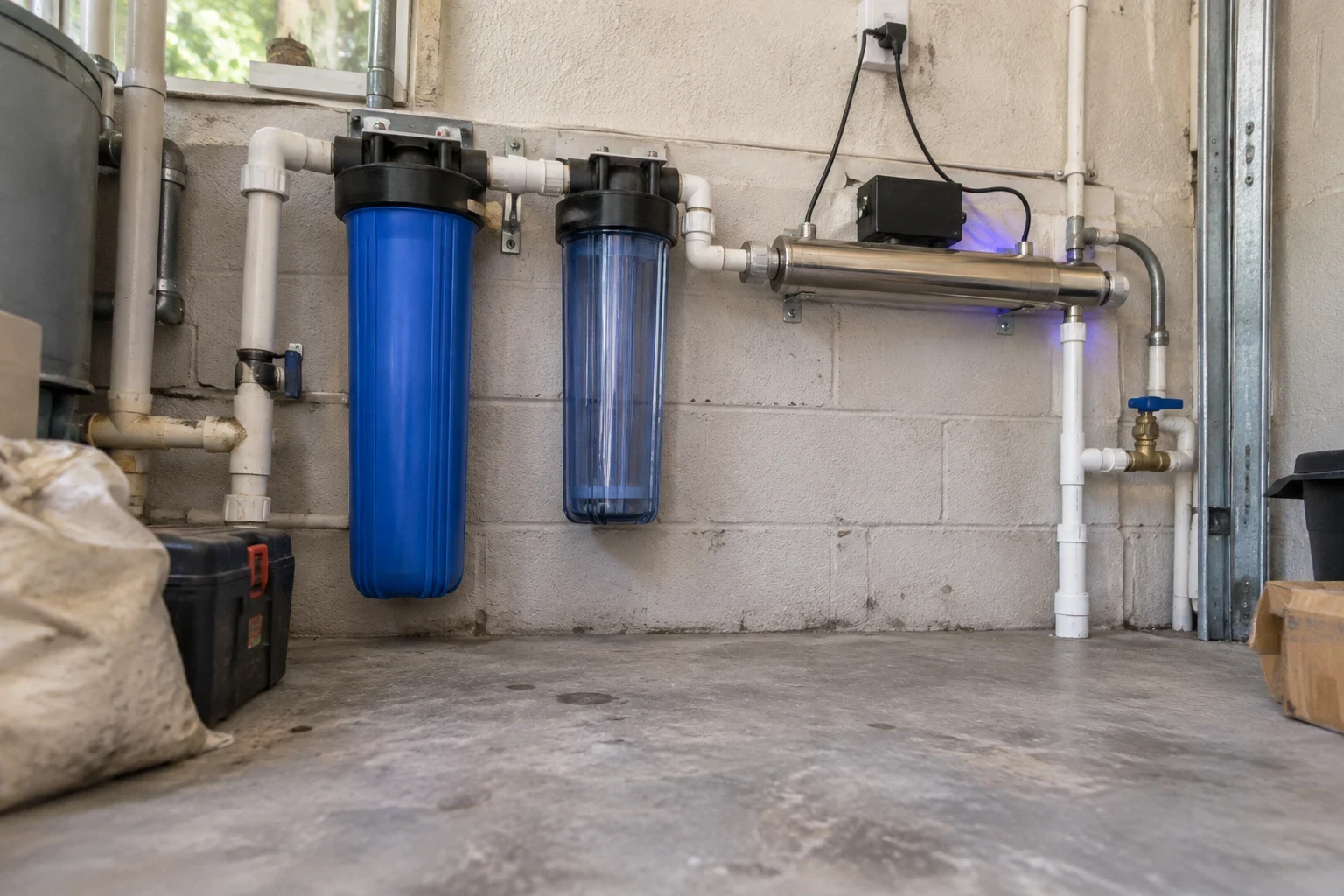
We install treatment systems that take sulfur smell, iron, manganese and sediment out of private well water before it reaches your fixtures. You see photos of your wellhead, pressure tank and plumbing as we find them, then of every part we install.
What well water treatment fixes, and why
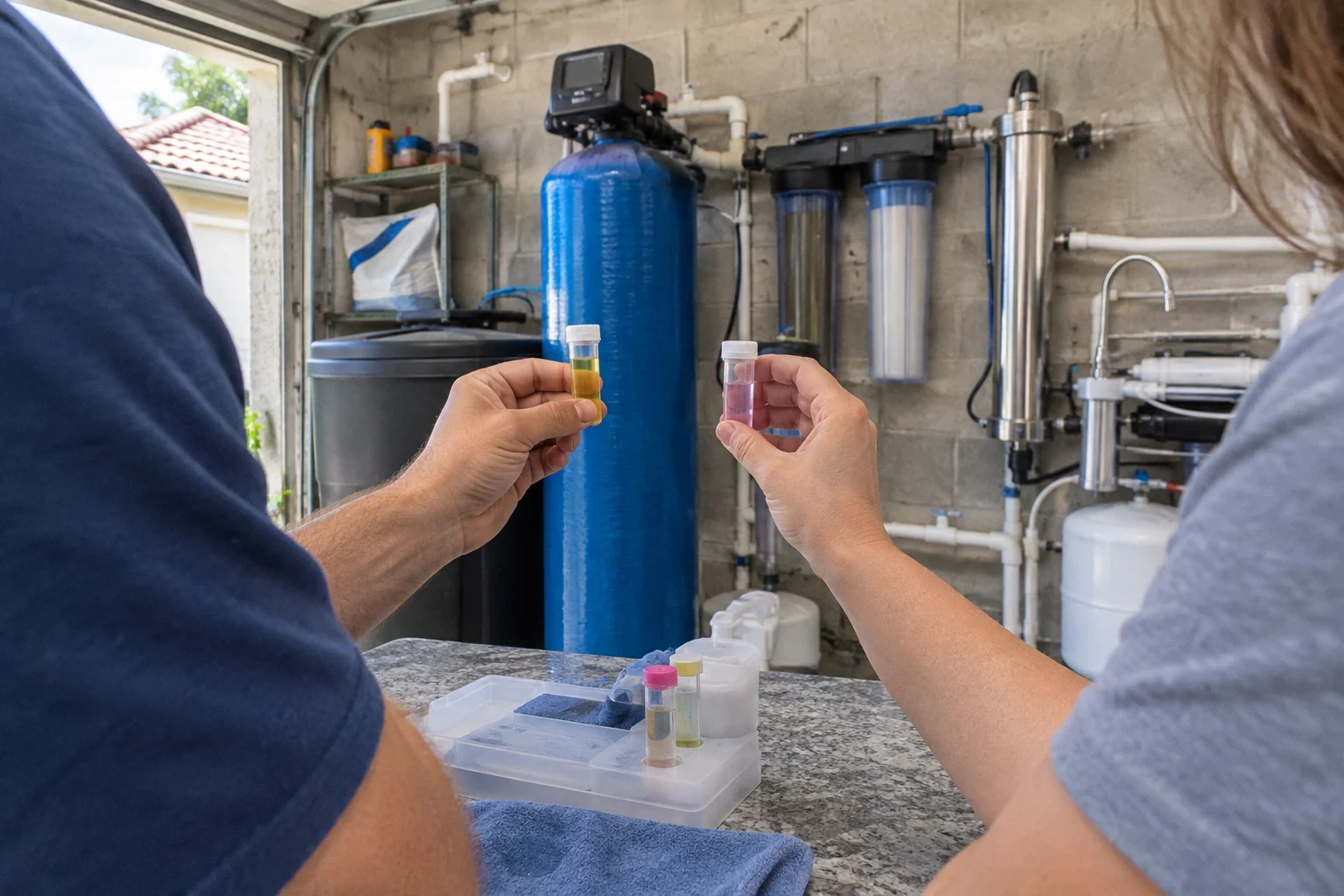
Well water picks up whatever the rock and soil around the casing hold. In Florida's limestone aquifer that usually means hydrogen sulfide gas, dissolved iron and sometimes manganese or tannins. Iron leaves the well clear, then oxidizes in your tub and toilet into orange-brown stains. Manganese does the same thing in black. Hydrogen sulfide gives the rotten-egg smell.
A city-water filter is not built for this. Well treatment usually starts by oxidizing those dissolved minerals so they turn solid, then trapping them in a filter bed that backwashes itself clean. Depending on what your water carries, we pair that with a sediment stage, carbon polishing or a softener.
Before we recommend anything, we document what we see at your well equipment and inside your home, so you know exactly why each stage is on the list.
What the work includes
- Sediment pre-filtration
- A spin-down or cartridge sediment filter goes first. It catches sand and grit from the pump so the media downstream does not clog early.
- Air-injection oxidizing filter
- The upper part of this tank holds a pocket of trapped air. Water passing through it turns dissolved iron, manganese and hydrogen sulfide into particles the media bed can hold. On a set schedule, the control valve flushes those particles to drain and draws in fresh air.
- Chlorine injection for heavy sulfur or iron bacteria
- When sulfur levels are high or iron bacteria leave slime in toilet tanks, a metering pump feeds chlorine into a contact tank ahead of a carbon filter. The carbon then removes the leftover chlorine so your water does not taste of it.
- Softening or carbon polishing
- If hardness is part of the picture, a softener follows the iron filter. A carbon stage can be added for taste and any remaining odor.
- Bypass valves and drain line
- Every tank gets a bypass so you keep water during service. We run the backwash line to an approved drain point and add an air gap so wastewater cannot siphon back.
- Labeled record of the install
- You get photos of the existing setup, the plumbing as it is opened up and the finished system, with each component labeled.
Signs your well needs treatment
Rotten-egg smell
That is hydrogen sulfide. When the odor shows up only at the hot taps, the anode rod inside your water heater is a likely source, and we will say so instead of selling you a filter.
Orange or rust stains
Ferric iron settles on porcelain, grout and laundry. Bleach makes iron stains worse because it sets them.
Black specks or gray staining
Manganese oxidizes dark and often shows up in dishwashers and toilet bowls first.
Slimy buildup in toilet tanks
Reddish or brown slime points to iron bacteria. It feeds on dissolved iron and can foul fixtures and existing filters.
Grit in aerators and valves
Sand from the well wears out washer valves, faucet cartridges and the control valves on any treatment equipment you already have.
How a well treatment job runs
- 1
Phone conversation
You describe the smell, the staining and your current equipment. We ask about your pump, pressure tank and any lab report you already have.
- 2
In-home look
We inspect the wellhead, pressure tank, existing filters and the fixtures showing problems, and photograph each one. We also check your pump's flow rate, because the filter has to get enough water to backwash properly.
- 3
Written recommendation
You get a list of each stage, why it is there and what it will remove, tied to what we found on site. If a smaller system will do the job, that is what we recommend.
- 4
Install day
We shut off the pump, cut in after the pressure tank, set the tanks, plumb the bypass and drain line, then load and backwash the media. Fittings are pressure-checked before we restore water, and the area is cleaned before we leave.
- 5
Startup and handoff
We set the backwash schedule, show you the bypass and the control valve display, and send you the record of the finished system. You also have ongoing customer support for maintenance, filter replacements, and service needs.
What moves the cost of well treatment
Two things set the price: the mix of contaminants in your well and the volume of water your home uses each day. A home with mild sulfur needs fewer stages than one with iron, manganese and iron bacteria together. You get a line-by-line written quote before any work starts.
- Number of treatment stages
- Each contaminant may call for its own stage. Sediment, oxidation, chlorine injection, carbon and softening each add equipment and media.
- Pump flow rate and tank size
- A larger tank needs more backwash flow. If your pump cannot supply it, the system has to be sized differently or use a different media.
- Location and protection
- Equipment installed outdoors near the coast needs a cover or enclosure against sun and salt air. Tight spaces next to the pressure tank add plumbing time.
- Drain and electrical access
- The control valve needs a nearby outlet and the backwash needs a drain. Long runs to either add labor and material.
- Removing old equipment
- Failed tanks, clogged media and corroded fittings have to come out first, and sometimes the plumbing around them needs repair.
Well water treatment questions
Something not covered here? (727) 634-9444
Why does only my hot water smell like sulfur?
Often the magnesium or aluminum anode rod in your water heater reacts with sulfate in the water and produces hydrogen sulfide inside the tank. A well filter will not stop that. Swapping the anode for a different type usually does, and we will tell you if that is the real cause.
Will a water softener alone fix my iron problem?
A softener can take out a small amount of dissolved iron. Over time, though, iron coats the resin beads and cuts their capacity, and a softener has no effect on sulfur or iron bacteria. For anything more than light iron, an oxidizing filter ahead of the softener protects it and does a better job.
Will treatment lower my water pressure?
Any filter adds some pressure loss, which is why we size tanks and valve ports to your pump's flow. A clogged sediment cartridge is the most common cause of a pressure drop later, and it is a quick change.
What maintenance does the system need?
Air-injection filters backwash on their own, so most of the upkeep is replacing sediment cartridges, checking the air draw and replacing media every several years. Chlorine systems need the solution tank refilled. We provide ongoing customer support for maintenance, filter replacements, and service needs.
What happens to the dirty water when the filter cleans itself?
Each flush cycle carries the trapped iron and sulfur particles out through a dedicated discharge hose to a code-approved drain point. The hose ends above the drain with open space between them, so that wastewater has no path back into your supply lines. Before install day we show you the route the line will take, and we photograph it once it is in place.
Get your well water sorted out
Tell us what you are smelling and seeing, and we will explain what is likely causing it and what an inspection at your home looks like. Every step after that comes with photos.