Water Filtration in Gulfport, With a Record of Every Install Step
We install and service whole-home filtration, water softeners, under-sink reverse osmosis and well water treatment for homes in Gulfport, South Pasadena and St. Petersburg. You get photos of your old equipment, the plumbing we changed and the finished system, so you can see the work behind the walls and cabinets.
Where We Install and Service Systems
We work in homes throughout Gulfport and nearby, including South Pasadena, St. Petersburg, St. Pete Beach and Treasure Island. We also cover Lealman, West Lealman, Kenneth City, Pinellas Park, Seminole and Tierra Verde. City water and private wells both turn up across the area, and we treat each.
- Gulfport
- South Pasadena
- St. Petersburg
- Lealman
- West Lealman
- St. Pete Beach
- Treasure Island
- Kenneth City
- Tierra Verde
- Pinellas Park
- Seminole
If you are unsure whether your street is in range, ask when you reach us by phone and we will tell you right away.
Filtration, Softening and Treatment for Your Home
Most of what we do falls into a few jobs: whole-home filtration at the main line, chlorine and chloramine removal, reverse osmosis at the kitchen sink, and water softeners where scale is the real problem. We also handle well water treatment, which in Florida often means sulfur odor and iron staining that city water does not bring. When an older softener or filter tank stops keeping up, we look at water softener repair and maintenance first and talk about water softener and filtration system replacement only when a repair no longer makes sense.
Whole-Home Filtration
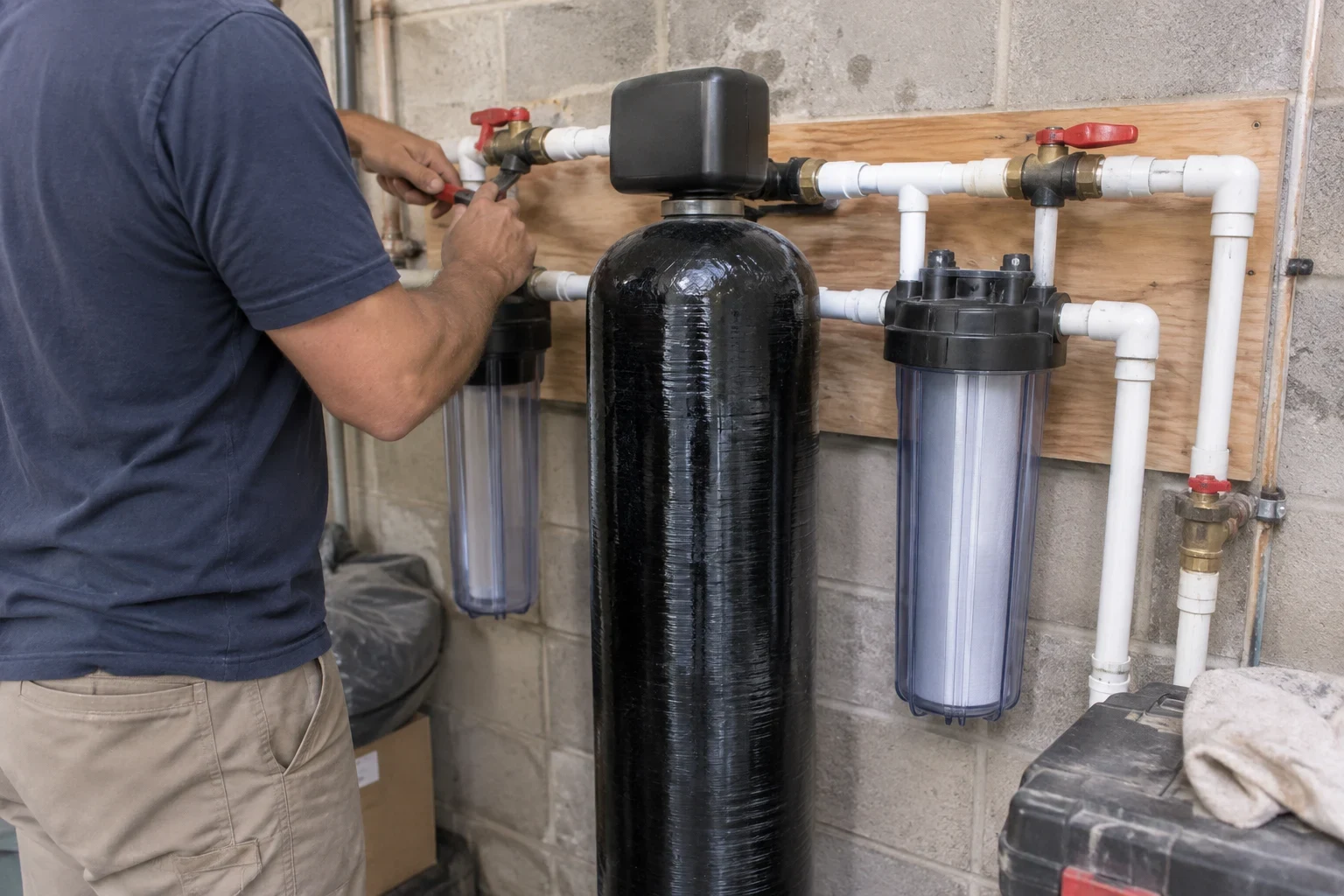
A sediment prefilter and catalytic carbon tank on your main line, so showers, laundry and every faucet draw from the same treated supply.
Water Softeners
Ion exchange softeners sized by grain capacity and fitted with metered valves, a bypass and a drain line with a proper air gap.
Reverse Osmosis
A multi-stage under-sink system for drinking and cooking water, with each stage and fitting recorded so you know exactly what sits under your sink.
Well Water Treatment
Treatment systems for private wells that remove rotten-egg odor, rust staining and grit, with each stage of the job documented for you.
System Replacement
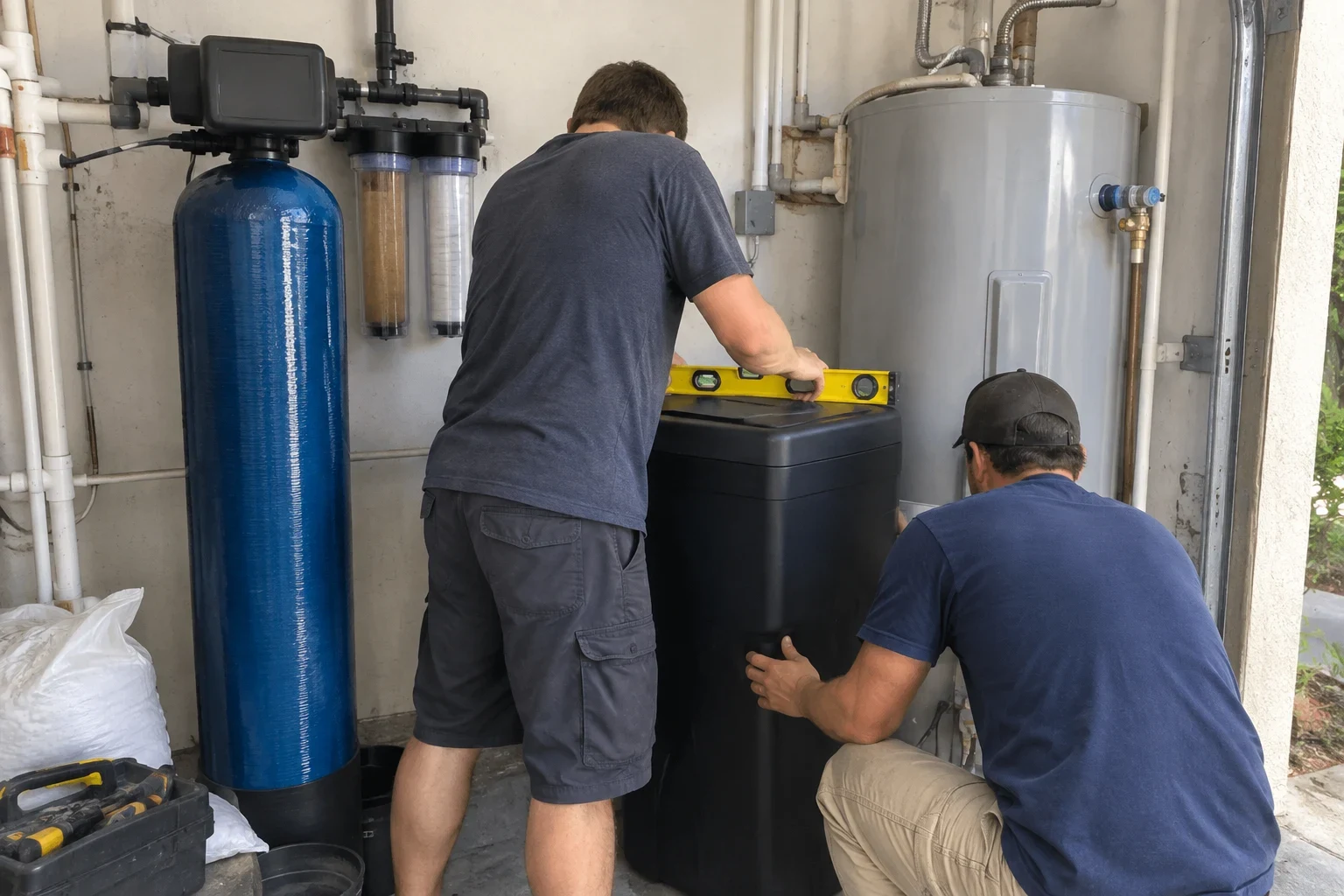
We pull worn-out softeners and filters, install a correctly sized new system with a fresh bypass and drain, and document each stage of the swap.
Softener Repair & Maintenance
We diagnose and fix stuck control valves, clogged injectors, salt bridges and tired resin, and we show you each problem and each repair before we leave.
Chlorine & Chloramine Removal
Whole-house catalytic carbon systems that remove the pool smell and flat taste of treated tap water, with photos of your install from start to finish.
How a Job Runs, From First Call to Startup
Most installs finish in one visit, and your water is usually off for only part of that time.
- 1
A phone conversation
You tell us what you are noticing: chlorine smell, spots on glassware, scale on shower heads, rust stains or a softener that keeps running out of salt. We ask about your home's plumbing and any equipment already in place.
- 2
A look at your setup
We visit to see where the main line enters, what pipe material it is, and where a drain and outlet sit. We document all of it so the estimate matches what is really there.
- 3
Your written estimate
You get a line-item estimate that names the valve, tank and media, along with the images from our visit. Where a permit applies, we include it and pull it.
- 4
Install day
We lay down floor protection, shut off the water, install a bypass loop and set the system. Each connection is documented, then we flush the media, set the regeneration schedule and check every joint for leaks.
- 5
Walkthrough and follow-up
Before we leave, we point out where the bypass valve is, walk you through topping off salt or swapping cartridges, and explain what the readout on the valve means. Your install record stays with you, and we remain available for maintenance and filter changes.
How We Work in Your Home
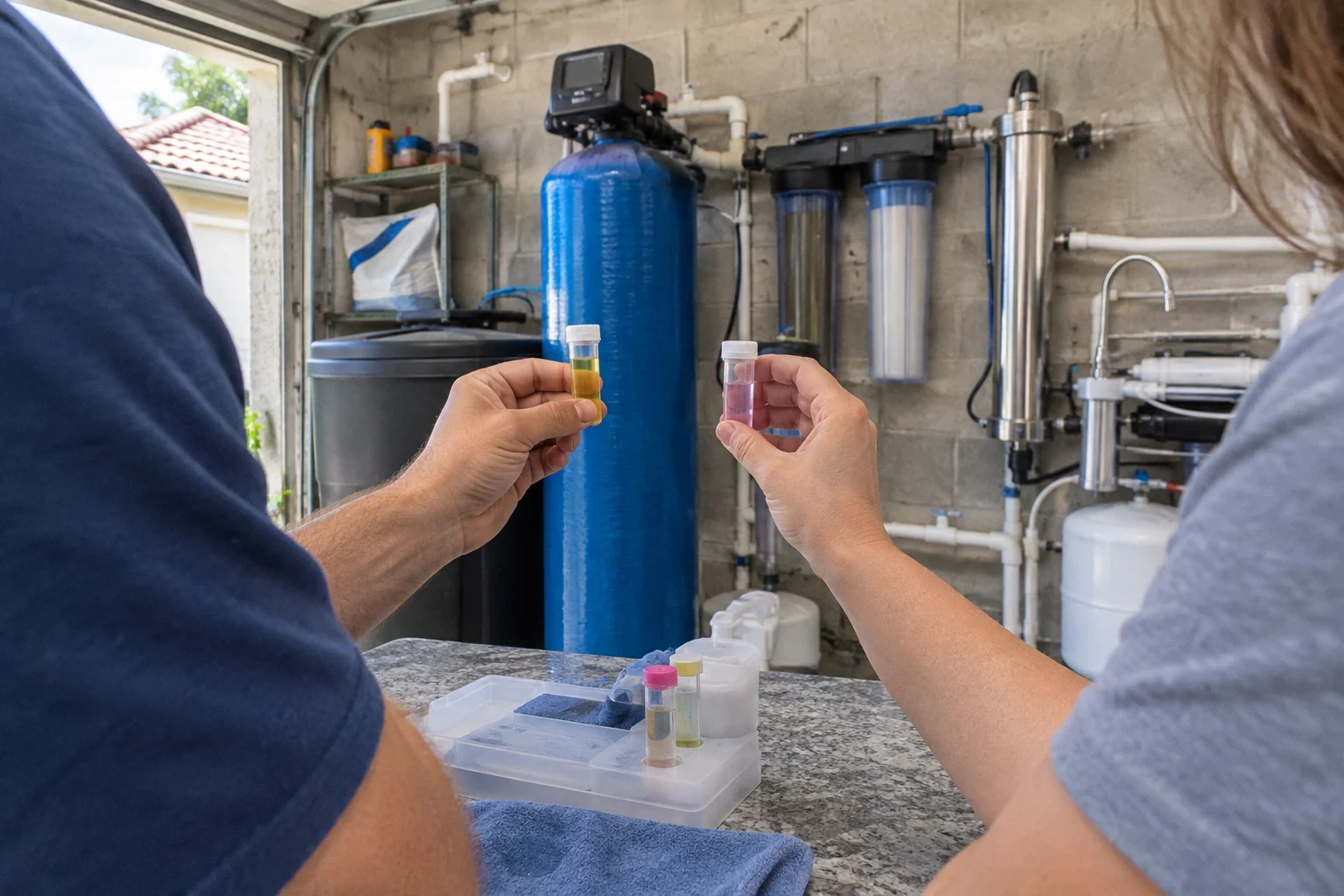
A filtration system sits in a garage or utility closet and mostly goes unnoticed. That is why we keep a visual record of what was there before and what we left behind.
- Each stage on record
- We photograph the existing setup when we arrive, the pipe connections once they are opened, and the finished install with the bypass valve and drain line in view. If we find corroded fittings or a cracked tank head, you see it the same way we did.
- Parts named, not just priced
- Your estimate lists the control valve, the tank size and the media inside it, whether that is catalytic carbon, standard granular carbon or softening resin. Each line says why that part fits your water and your plumbing.
- Warranty on the parts that matter most
- The control valve and the media do the real work in any treatment system. We back the control valves and filtration media we install with a 5-year warranty.
- Repair before replacement
- A softener that stops regenerating often needs a new piston, seals or a brine valve, not a whole new unit. We check those first and tell you plainly which way the numbers point.
- Help after the install
- We offer ongoing support for maintenance, filter replacements and service needs for as long as you own the system. One call reaches someone who knows how your equipment was set up.
About Gulfport Water Filtration
We are a local water treatment company working inside homes in Gulfport and the surrounding area. Our work is fitting the right equipment to the water you actually have and the plumbing you already own, then keeping it running year after year.
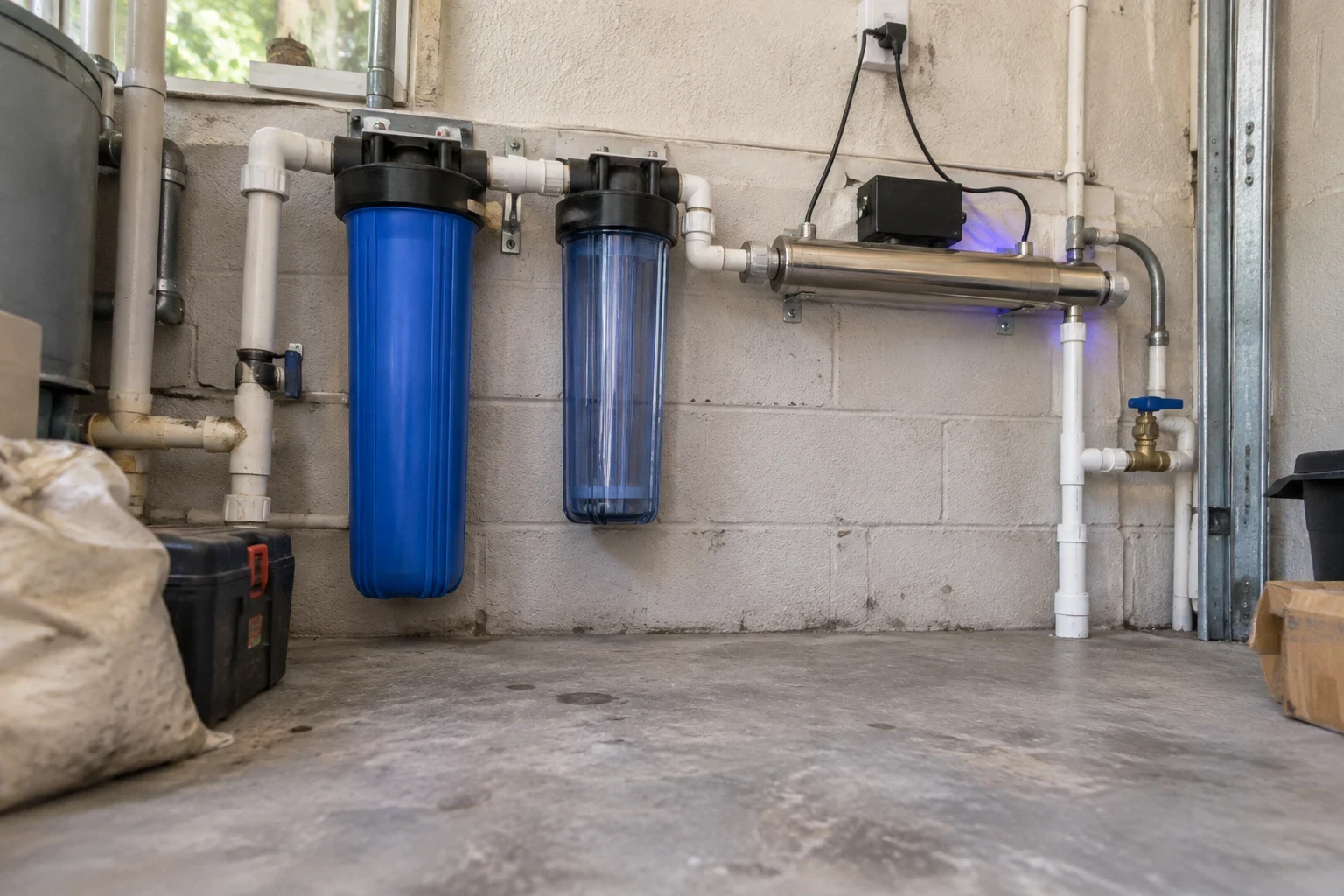
We document our work in photos because most of it ends up hidden behind a garage wall or under a kitchen sink. When you can see the soldered joint, the drain air gap and the bypass valve, you know what you paid for. It also makes later service faster, because anyone looking at your system can see exactly how it was built.
- Warranty
- 5-year warranty on control valves and filtration media
What Moves the Price of a Water System
No two installs cost the same, because the equipment and the plumbing around it change from house to house. These are the things that move the number most. We explain each one on your estimate so nothing shows up later as a surprise.
We give you a written estimate with each part and labor item on its own line before any work starts. If something changes once the pipes are open, we show you what we found and talk it over before going further.
- Type of system
- An under-sink reverse osmosis unit takes a few hours inside one kitchen cabinet. A whole-home carbon tank means cutting into the main supply line, which adds parts and labor. Pairing a softener with a filter brings a second tank and more plumbing.
- Tank size and flow
- The tank has to keep up with your home's peak demand, such as two showers and a washing machine running at once. More bathrooms usually means a larger tank and more media.
- Media choice
- Chloramine breaks down slowly in standard carbon, so it calls for catalytic carbon, which costs more. Well water with iron or sulfur may need a different media bed entirely.
- Plumbing at the install point
- Tying into copper, CPVC or PEX takes different fittings and different labor. A tight closet or a main line that runs through a slab can add time.
- Drain and power access
- Softeners and backwashing filters need a drain for their rinse water, and most control valves need an outlet. If neither is close, we have to run one.
- Removing what is there
- Hauling out an old tank, emptying spent resin and capping unused lines all add labor. We list that work separately so you can see it.
Questions Homeowners Ask Us
Does my utility water use chlorine or chloramine, and does it matter?
Utilities in the area disinfect with either chlorine or chloramine, and your water provider's annual water quality report says which one. It matters because chloramine is more stable and passes through ordinary carbon faster. If your water carries chloramine, we use catalytic carbon in a whole-home tank so the taste and odor stay out of every tap.
Do I need a water softener, or just a filter?
A carbon filter takes out chlorine, chloramine, taste and odor, yet calcium and magnesium pass right through it, and those minerals are what leave scale behind. A softener swaps them out using ion-exchange resin. If you see white crust on faucets, cloudy spots on dishes or scale building in your water heater, a softener may be worth it. If your main complaint is taste or smell, a filter alone is often the better fit, and we will say so.
What is the difference between reverse osmosis and whole-home filtration?
Whole-home filtration treats every gallon that enters your home, so showers, laundry and every faucet get the benefit. Reverse osmosis pushes water through a fine membrane at one sink and removes far more dissolved material, including lead that can come from older faucets and fittings. Many homes pair the two: carbon for the whole house, RO for drinking and cooking water.
What warranty comes with a whole-home system?
The whole-home treatment tank carries a lifetime warranty. We go over the full coverage for your specific equipment when we write up your estimate, so you know which parts are covered before anything is installed.
My softener has stopped working right. Is it worth repairing?
In a lot of cases the tank and resin still have years left and the trouble sits in a few small parts. Typical culprits are worn piston seals in the control valve, a plugged injector, a brine float stuck in place or resin that has crumbled with age. We take the valve apart, photograph what we find and show you the worn pieces. Then we give you a straight answer on whether a repair pays off or a new unit is the smarter spend.
How long is my water off on install day?
For a typical whole-home or softener install, the water is off for part of the visit while we cut in the bypass loop and make the connections. An under-sink RO unit usually needs only the cold line at that sink shut off. We tell you the expected window before we start.
What happens after the install if I need filters or service?
We offer ongoing support for maintenance, filter replacements and service needs. You reach us by phone, and because we kept a record of how your system was installed, we can often answer questions about it before we even arrive.
See What Your Water System Needs
Tell us what you are noticing at the tap and what equipment you have now. We will explain the options in plain terms and set up a visit to look at your plumbing.