ServicesSoftener Repair & Maintenance
Water Softener Repair & Maintenance in Gulfport
We repair and service water softeners in your home: stuck control valves, clogged injectors, salt bridges and worn-out resin. Before we touch anything we photograph what we find, and before we leave we document the fix, so you see what was wrong and what changed.
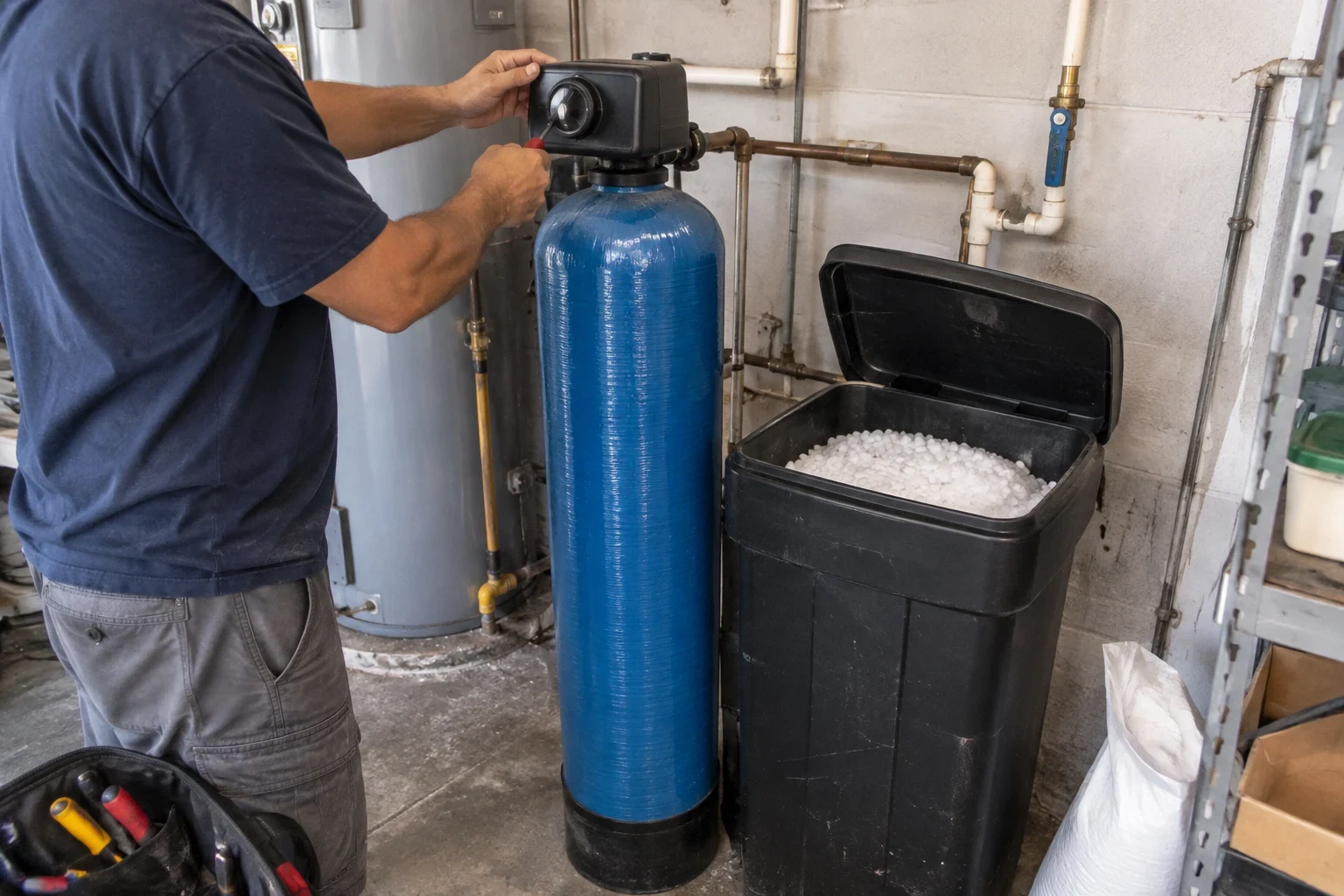
What a softener repair visit actually fixes
A water softener is a simple machine with a few parts that wear out. The control valve on top runs the regeneration cycle. An injector, sometimes called a venturi, pulls brine from the salt tank. The resin bed in the tall mineral tank traps hardness minerals and gets rinsed clean with that brine. When any one of these fails, hard water slips through, salt use jumps, or the brine tank fills with water.
Most problems trace to a short list of causes: debris in the injector screen, worn piston seals and spacers in the valve, a hardened crust of salt in the brine tank, or resin that has broken down over the years. Chlorine and chloramine in treated city water slowly swell and soften resin beads, which is why older beds often turn to mush.
We find the actual cause, point it out to you, and repair that part. If the unit is past saving, we tell you plainly and explain what our water softener and filtration system replacement work would involve instead.
What we check and service
- Control valve inspection
- We cycle the valve manually through backwash, brine draw, rinse and refill. Worn piston seals, cracked spacers and a sticking drive motor show up here. We replace seal and spacer kits or the motor when that is what failed.
- Injector and screen cleaning
- A clogged injector is the most common reason a softener stops drawing brine. We pull it, clean the nozzle and throat, replace the screen if it is torn, and set aside the debris we removed so you can see it.
- Brine tank cleanout
- We break up salt bridges and mushing, scoop out the sludge at the bottom, and check the brine well, safety float and brine line for cracks or kinks.
- Resin bed evaluation
- We look at the condition and flow through the bed. Broken resin, iron fouling or a cracked distributor tube can each cause hard water. We can clean fouled resin or replace the bed when the beads are spent.
- Settings and bypass check
- We confirm the hardness setting, regeneration time and salt dose match your household, and check that the bypass valve is fully in service. A half-open bypass sends untreated water to your taps.
- Drain line and flow control
- A blocked drain line flow control or a pinched drain hose stops the backwash and leaves the tank full of dirty water. We clear it and secure the line with a proper air gap.
Signs your softener needs service
Spots and scale are back
White crust on faucets and glass shower doors usually means the resin is not regenerating. The cause is often a clogged injector or a valve that stopped cycling.
Water standing in the brine tank
A few inches of water is normal on many models. A tank half full of water points to a failed brine draw or a stuck float.
Salt level never drops
If you add salt and it sits untouched for months, either a hard crust has formed above the water or the unit is not regenerating at all.
Constant running or drain noise
A valve that keeps sending water to the drain has a worn seal or a piston that will not seat. That wastes water every hour.
Salty taste or low pressure
Salty water after regeneration suggests an incomplete rinse. A drop in pressure through the whole house can mean broken resin packing the tank or a clogged distributor screen.
How a service visit runs
- 1
Call and describe the symptom
Tell us the make, roughly how old the unit is, and what you are seeing. That lets us bring the likely seal kits, injectors and screens on the first trip.
- 2
Record the before
We photograph the valve, brine tank, bypass and drain connections before taking anything apart. You get a record of how the system looked when we arrived.
- 3
Diagnose and explain
We put the bypass in service, run a manual regeneration and watch each cycle. Then we show you the failed part and explain the repair and its cost before we start.
- 4
Repair, clean and reset
We replace the worn parts, clean the brine side, set the controls and run a full regeneration to confirm the fix. Our closing photos show the new parts and the finished setup, and we wipe down the area before we go.
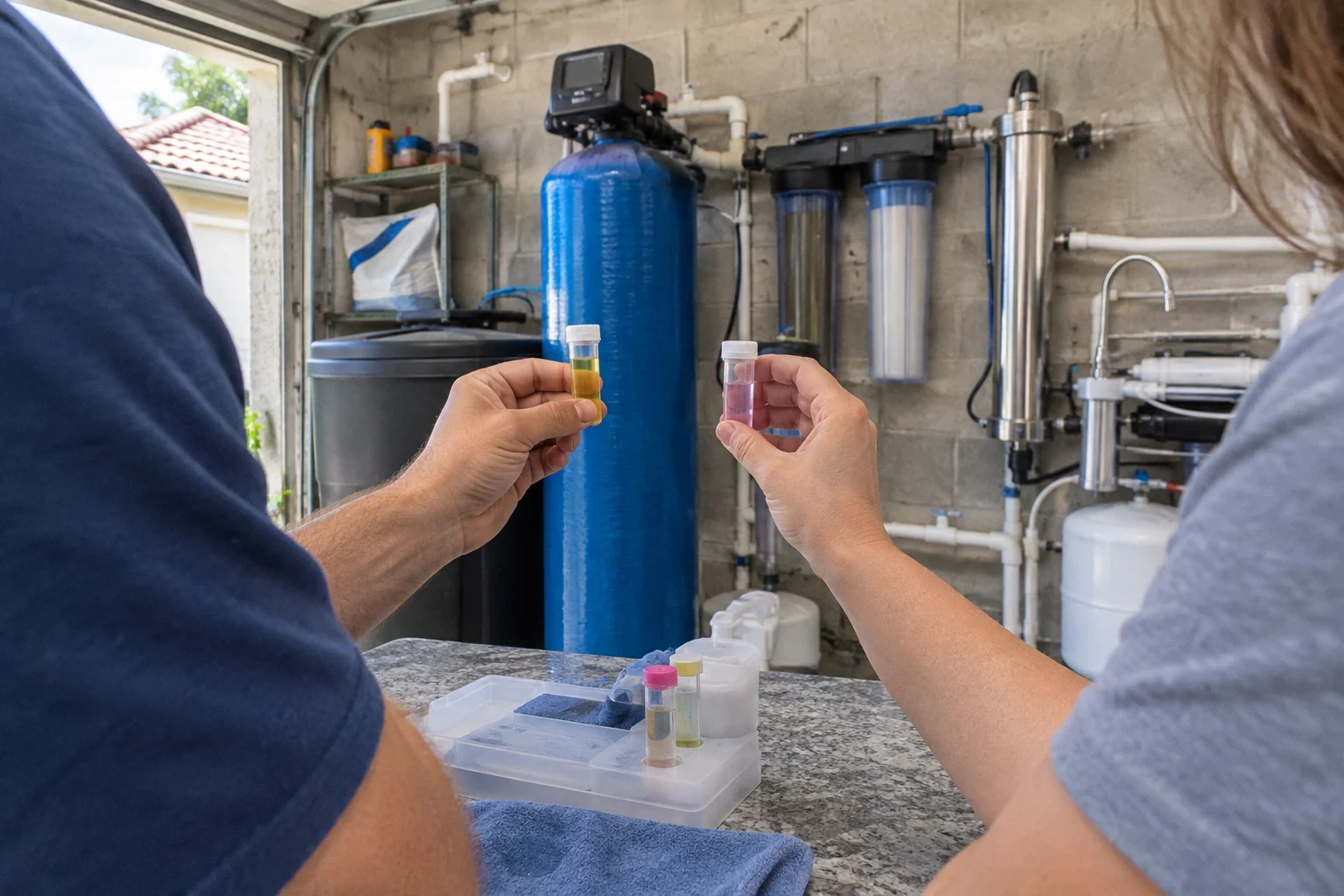
What sets the price of a softener repair
Cost depends on what failed, not on a flat package. A cleaned injector is a small job; a resin bed replacement is a larger one. You hear the price for the specific repair before any work begins.
- Which part failed
- Seal and spacer kits, injectors and screens are inexpensive parts. Drive motors, circuit boards and complete valve heads cost more.
- Resin condition
- Cleaning fouled resin costs less than replacing it. Replacement depends on the cubic feet of resin in your tank and whether the distributor tube also needs replacing.
- Brand and parts availability
- Common valve brands use widely stocked parts. Older or proprietary units may need special-order parts or an adapter, which adds time.
- Location and access
- A softener in an open garage is quick to work on. Units in tight closets or mounted outdoors, where sun and humidity break down covers and wiring, can take longer and sometimes need extra parts.
Softener repair questions
Something not covered here? (727) 634-9444
How often should my softener be serviced?
For most homes, once a year is a sensible schedule. We clean the injector and brine tank, check the valve seals and confirm the settings. Homes that use a lot of water, or units fed water with iron, may need it more often.
Is it worth fixing an older softener?
Often, yes. A control valve can be rebuilt with new seals and the resin can be replaced, and the tank itself rarely wears out. If the valve is obsolete or the tank is cracked, we will say so and walk you through replacement instead.
Can you work on a softener you didn't install?
Yes. Most residential softeners use a handful of common control valves, and we service them regardless of who installed the unit. We note the model plate first so we order the right parts if anything has to be special-ordered.
Why does the water in my brine tank look so high?
Usually the softener is refilling the tank but not drawing the brine back out. The cause is often a plugged injector, a kinked brine line or a stuck safety float. It is a common and usually straightforward repair.
Does chloramine in city water damage softener resin?
Over time it can. Chlorine and chloramine oxidize the resin beads, which swell, soften and lose capacity. A carbon prefilter, covered on our Chlorine & Chloramine Removal page, protects the resin and lengthens its life.
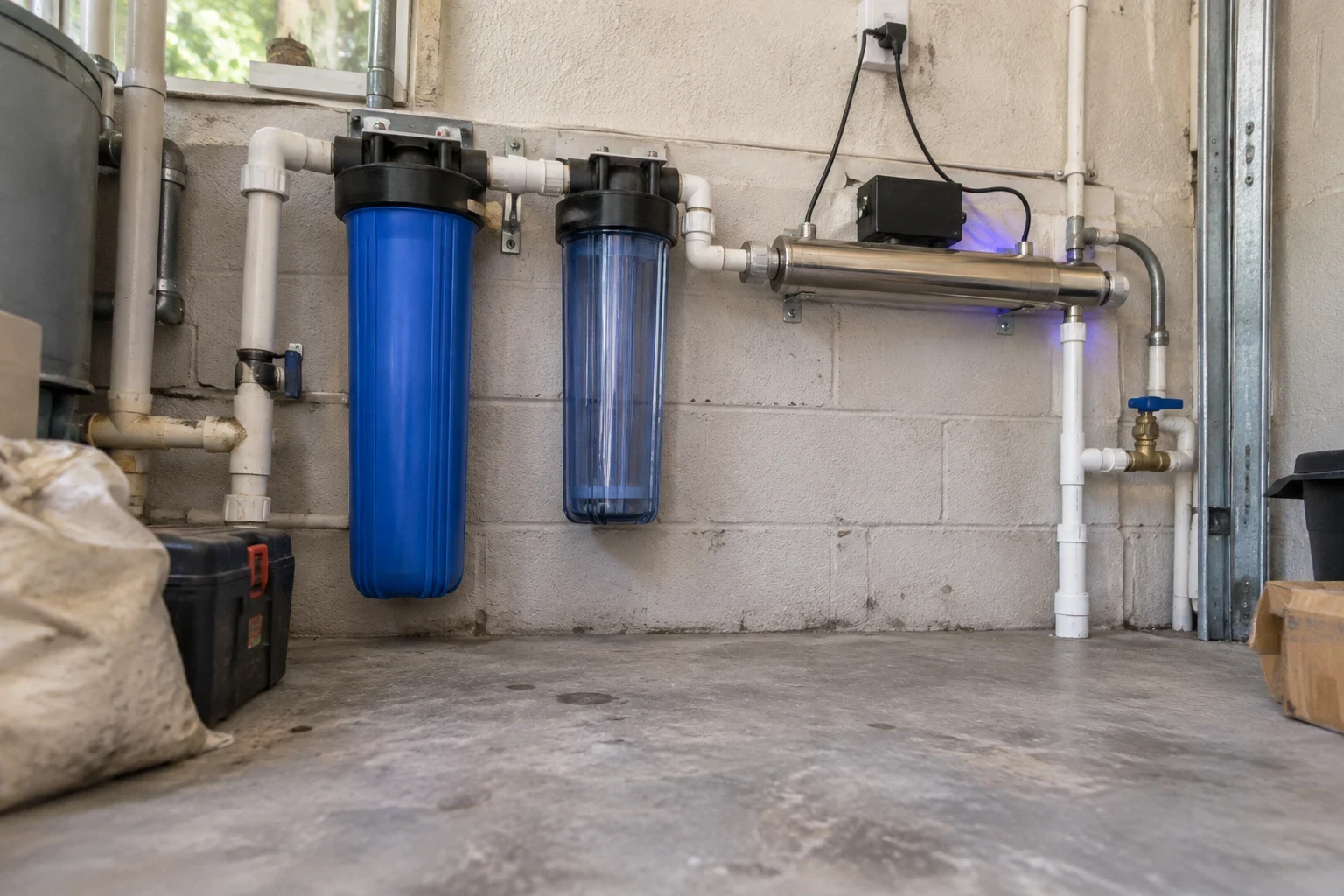
Get your softener working right again
Tell us what the system is doing and we will schedule a visit. You will see photos of what we found and what we fixed, and we stay available afterward for maintenance, filter replacements and later service needs.