ServicesReverse Osmosis
Reverse Osmosis Systems in Gulfport
We install under-sink reverse osmosis that sends drinking and cooking water through sediment, carbon and a membrane fine enough to hold back dissolved salts and metals. You get a dedicated faucet, a clear filter schedule and photos of every connection we made.
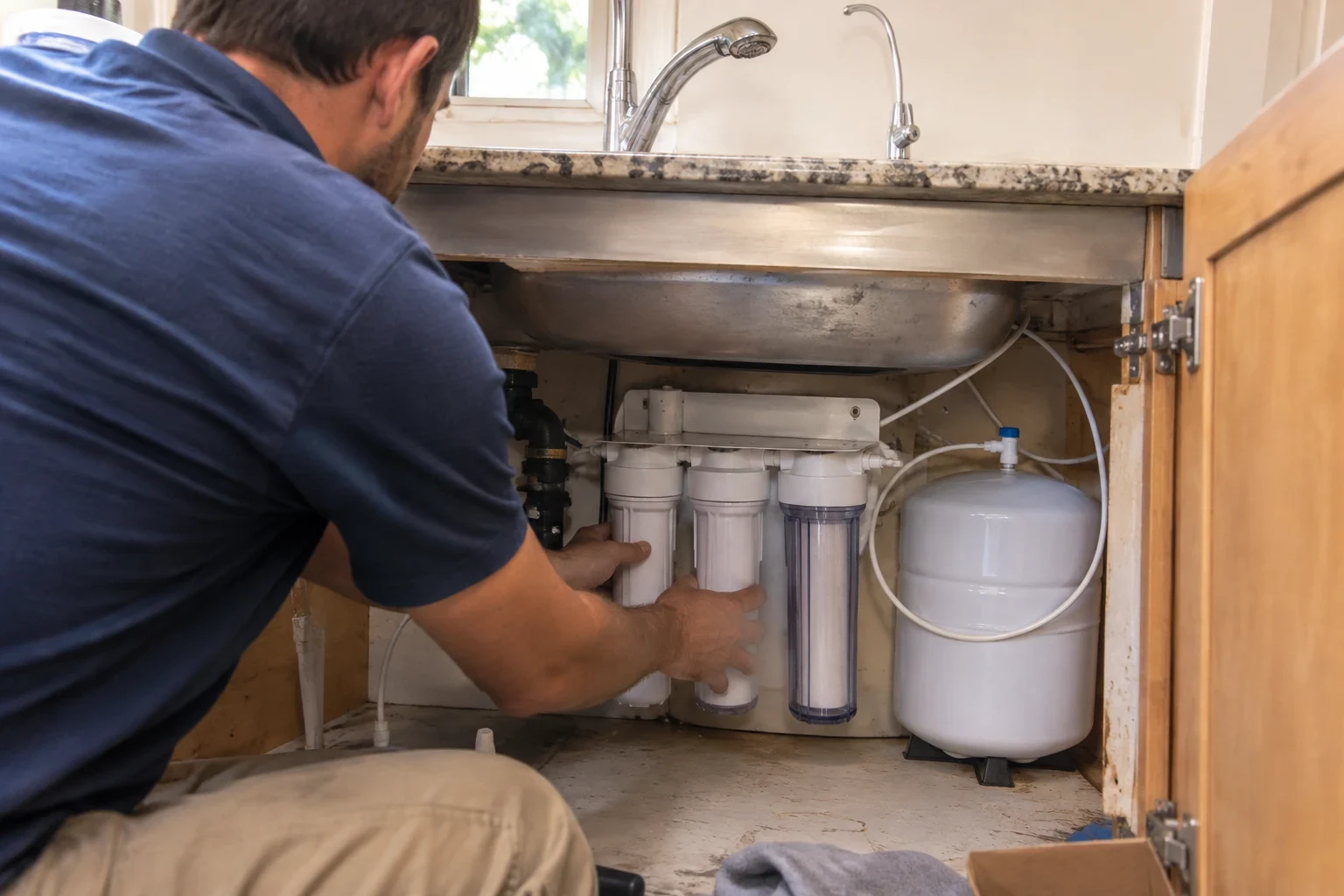
What Reverse Osmosis Does at the Kitchen Sink
Inside an RO unit, your household water pressure forces water against a thin-film composite membrane. Water molecules pass through, while most dissolved solids get turned back: sodium, nitrates, fluoride, lead picked up from older plumbing, and the minerals that leave spots on glassware. The water that makes it through, called permeate, fills a small storage tank or feeds the faucet directly. Everything the membrane rejects leaves as concentrate through a line to your drain.
This system serves one or two taps. It covers the water you drink and cook with, while showers, laundry and the dishwasher keep getting the same supply as before. If chlorine odor in the bathroom or scale on fixtures is what bothers you, whole-home filtration or a water softener fits better, and we will say so when we talk.
Every install is photo-documented. You get pictures of the feed valve, drain saddle, tank precharge and faucet mount, so the next person who opens that cabinet, including you, knows what is there and why.
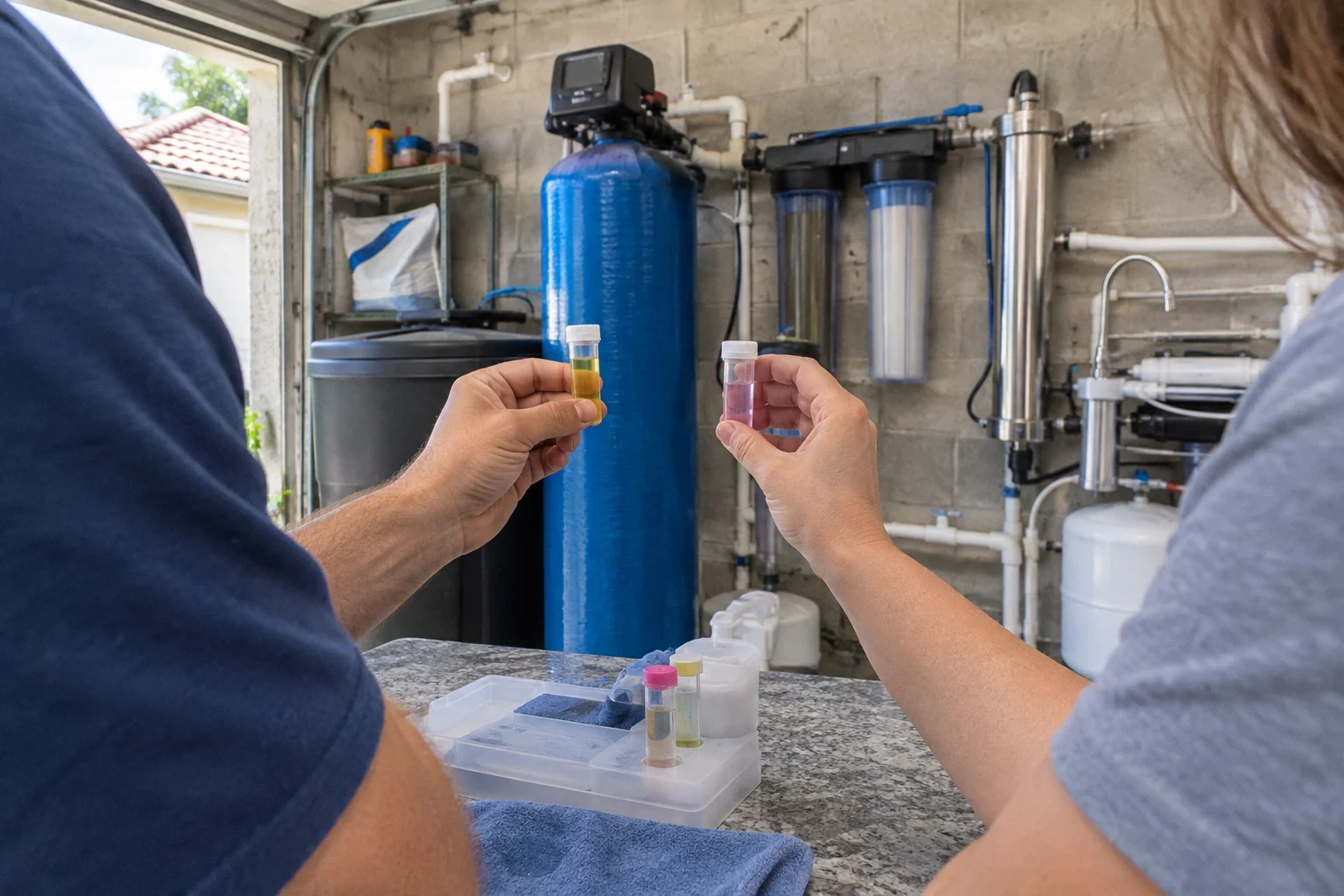
Parts of an Under-Sink RO System
- 01
Sediment prefilter
First in line is a 5-micron cartridge that traps sand, rust particles and loose scale from the pipes. Stopping that grit early keeps the carbon block behind it from plugging before its time.
- 02
Carbon block for chlorine and chloramine
Disinfectants in city water attack thin-film membranes and shorten their life. A carbon block stage ahead of the membrane removes them, and we size it for the contact time chloramine needs, which is longer than plain chlorine.
- 03
TFC membrane and flow restrictor
The membrane does the real separation. The flow restrictor on the drain line sets the ratio of clean water to concentrate, and a mismatched restrictor is one of the most common reasons an RO system runs slow or wastes water.
- 04
Storage tank or tankless unit
Tank systems use a bladder tank precharged to about 7 psi when empty, which we check with a gauge before filling. Tankless units skip the tank and need more cabinet width and an outlet.
- 05
Dedicated faucet and air gap option
We mount a lead-free faucet through an existing sprayer hole or a new hole in the sink or countertop. An air gap faucet keeps drain water from siphoning back if your local code or sink setup calls for one.
- 06
Optional fridge and ice maker line
We can tee RO water to your refrigerator with a separate shutoff, so ice and dispenser water match what comes out of the faucet.
Questions about Reverse Osmosis?
Call(727) 634-9444Signs Reverse Osmosis Is the Right Call
Your home has older supply pipes
Galvanized steel or old brass fittings and solder can release lead and iron into water that sits overnight. RO at the tap reduces lead in the water you actually drink.
You buy bottled water every week
An RO faucet replaces most of those cases and the trips to carry them in.
Coffee and tea taste flat or bitter
High dissolved solids and leftover disinfectant change how both brew. Lower TDS water usually gives a cleaner cup.
Spots on glasses and kettle scale
White rings and crusty kettle bottoms are minerals left behind as water evaporates. RO removes most of them from cooking and drinking water.
An old RO unit that drips or crawls
Slow fill, a tank that never fills, or a drain that runs nonstop often point to a spent membrane, a failed check valve or a lost tank precharge. Sometimes a repair fixes it, sometimes replacement makes more sense.
How the Install Day Runs
- 1
Talk it through by phone
We ask about your sink, cabinet space, faucet holes, fridge hookup and what bothers you about the water. That decides tank or tankless and which prefilters fit.
- 2
Check pressure and record the cabinet
We read your incoming pressure, because RO membranes slow down noticeably below about 40 psi and may need a booster pump. Then we take pictures of the cabinet as we found it, including any existing leaks or corrosion.
- 3
Mount, connect and document
We install the feed valve on the cold line, the drain saddle above the P-trap, the filter housings and the faucet. Each connection is photographed before the cabinet is closed up.
- 4
Flush, verify and walk you through it
We flush the carbon fines and membrane preservative, compare dissolved solids at the tap and the feed, check every fitting for drips and show you the filter change schedule. The pictures and readings stay with you.
What Moves the Price of an RO System
We give you the price by phone once we know your setup, broken out by system and installation. The membrane and housings are only part of the picture. Your sink, your pressure and where the water needs to go make the bigger difference.
- Tank or tankless
- Tankless systems with a built-in pump cost more up front but save cabinet space and fill a glass faster.
- Water pressure
- Low incoming pressure means adding a booster or permeate pump so the membrane can do its job without wasting water.
- Faucet location and surface
- When the sink already has a sprayer or soap-dispenser hole, the faucet goes right in. Cutting through quartz, granite or a porcelain sink needs a diamond or carbide bit and slower work, which adds labor time.
- Extra connections
- A fridge or ice maker line, a remineralization cartridge, or running tubing to a remote location adds parts and labor.
Reverse Osmosis Questions
How much water does an RO system send down the drain?
Standard systems send several gallons of concentrate to the drain for each gallon of clean water, depending on pressure and the membrane. A permeate pump or a newer high-efficiency membrane cuts that a lot. We set the flow restrictor to match the membrane so the ratio stays where it should.
How often do the filters need changing?
Plan on swapping the sediment and carbon prefilters every six months to a year. A busy kitchen, or water carrying more grit and disinfectant, pushes you toward the shorter end of that range. The membrane outlasts them and usually runs two to three years before it needs replacing. We offer ongoing customer support for maintenance, filter replacements, and service needs, so you have someone to call when it is time.
Does RO remove the minerals I actually want?
Yes. The membrane rejects calcium and magnesium just as it rejects sodium and lead. Your diet supplies far more of these minerals than tap water does. If you like the taste of mineralized water, we can add a remineralization cartridge after the membrane to put a small amount back.
Will it fit under my sink with a garbage disposal?
Usually. A tank system needs room for the tank beside the housings, and the disposal can limit where the drain saddle goes. We ask about your cabinet on the phone and suggest a tankless unit if space is tight.
Does RO treat the water for my whole home?
No. It is sized for drinking and cooking at one or two taps. For the whole house, look at our whole-home filtration or chlorine and chloramine removal services.
Get Clean Water at Your Kitchen Tap
Give us a sense of your cabinet space, your water pressure and what you would like to change about the water you drink. We will suggest a system and walk through the cost before anything gets installed.